Is Titanium Jewelry Safe for Everyday Wear? What to Know Before You Buy
Wearing jewelry every day is something most people don’t think twice about until a small issue starts to show up. It might be a slight irritation on the skin, a chain that begins to fade, or a ring that no longer looks the way it did when it was new. These details tend to build up slowly, but once they do, they change how comfortable and reliable a piece of jewelry feels over time.
For anyone who has dealt with discoloration, skin sensitivity, or constant maintenance, material starts to matter much more than style alone. A piece can look great at first, but if it doesn’t hold up in daily wear, it quickly loses its appeal.
That’s where titanium jewelry starts to stand out, especially when people begin asking a simple question: is titanium jewelry actually safe for everyday wear?
Titanium has become increasingly popular across different categories, from rings and chains to everyday accessories, largely because of how it performs over time. It doesn’t rely on coatings to maintain its appearance, and it doesn’t behave the same way as more traditional metals like stainless steel or plated alloys. Instead, it offers a combination of stability, comfort, and durability that tends to become more noticeable the longer you wear it.
This guide takes a closer look at what actually matters when it comes to titanium jewelry. Rather than focusing on marketing claims, it breaks down how titanium interacts with your skin, how it holds up with daily use, and what to expect over time. If you’re considering switching to titanium or simply want to understand whether it’s a better fit for everyday wear, the sections below will give you a clear, practical view of what to expect.
What Makes Titanium Different From Other Jewelry Metals?
Most jewelry materials look fairly similar at first, especially when they’re new. Stainless steel, silver, and plated alloys can all have a clean, polished finish that feels solid enough in the beginning. The difference usually doesn’t show up right away. It tends to appear after a few weeks or months of regular wear.
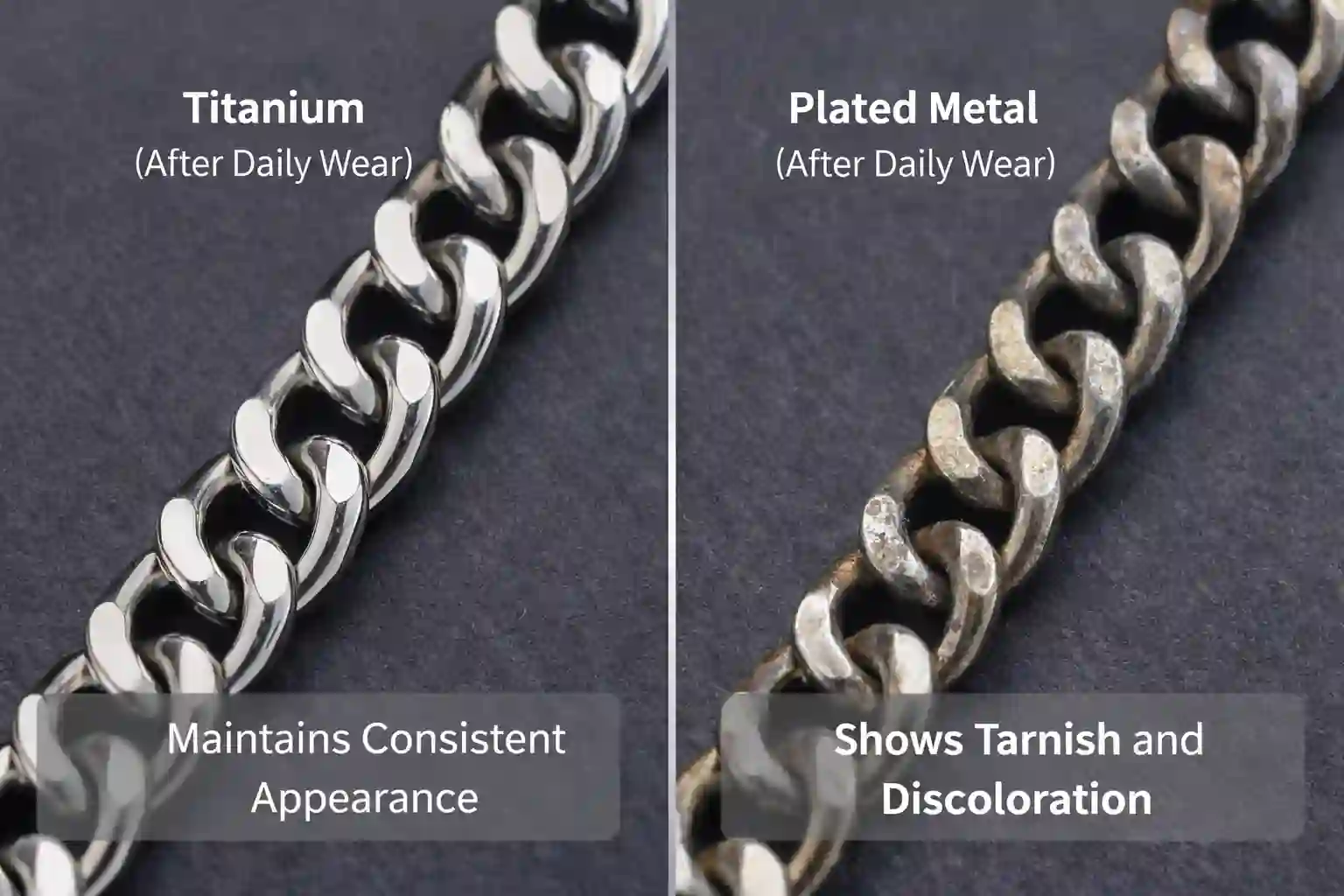
With many common metals, what you’re actually seeing on the surface is a finish or coating. Over time, that outer layer can wear down, especially with daily use, exposure to sweat, or friction against clothing. Once that happens, the underlying material starts to show, which is often when discoloration or uneven wear becomes noticeable.
Titanium behaves in a different way.
Instead of relying on a coating, it forms a naturally stable oxide layer when exposed to air. This layer is part of the metal itself rather than something applied on top. Even if the surface picks up small scratches, that protective layer reforms on its own, which helps keep the material underneath consistent.
In everyday use, that leads to a few differences you start to notice over time:
-
The surface stays consistent instead of gradually wearing through
-
The color doesn’t shift or fade with regular use
-
The overall structure feels stable even after long-term wear
Another thing that becomes noticeable fairly quickly is the weight. Titanium feels lighter than most traditional metals, but not in a way that makes it feel cheap or hollow. With thicker chains or larger pieces, that balance makes a difference. You still get a solid presence, just without the constant weight pulling on your neck or wrist throughout the day.
Is Titanium Jewelry Safe for Sensitive Skin?
For many people, this is probably the biggest concern before buying any piece of jewelry.
If you’ve ever worn a ring or chain that left your skin itchy or slightly red after a few hours, you’ll know how frustrating that can be. In most cases, those reactions come from trace metals like nickel, which are commonly used in alloys. Even pieces labeled as “safe” don’t always stay that way after repeated wear.
Titanium tends to feel different from the start.
From my own experience, it’s one of the few materials I can put on and then simply forget about. There’s no subtle irritation building up over time, no need to take it off halfway through the day, and no noticeable reaction even in warmer conditions when sweat becomes a factor.
That mostly comes down to how the material behaves.
Pure titanium is widely considered hypoallergenic, meaning it doesn’t trigger reactions for the vast majority of people. Since it doesn’t contain nickel and doesn’t rely on surface coatings, there’s no gradual exposure to underlying metals as the piece ages or gets scratched.
In everyday use, this shows up in small but noticeable ways. You can wear it for long periods without your skin feeling irritated, leave it on through changes in temperature or humidity, and not have to think about rotating it on and off just to stay comfortable. Over time, that consistency becomes more important than it might seem at first.
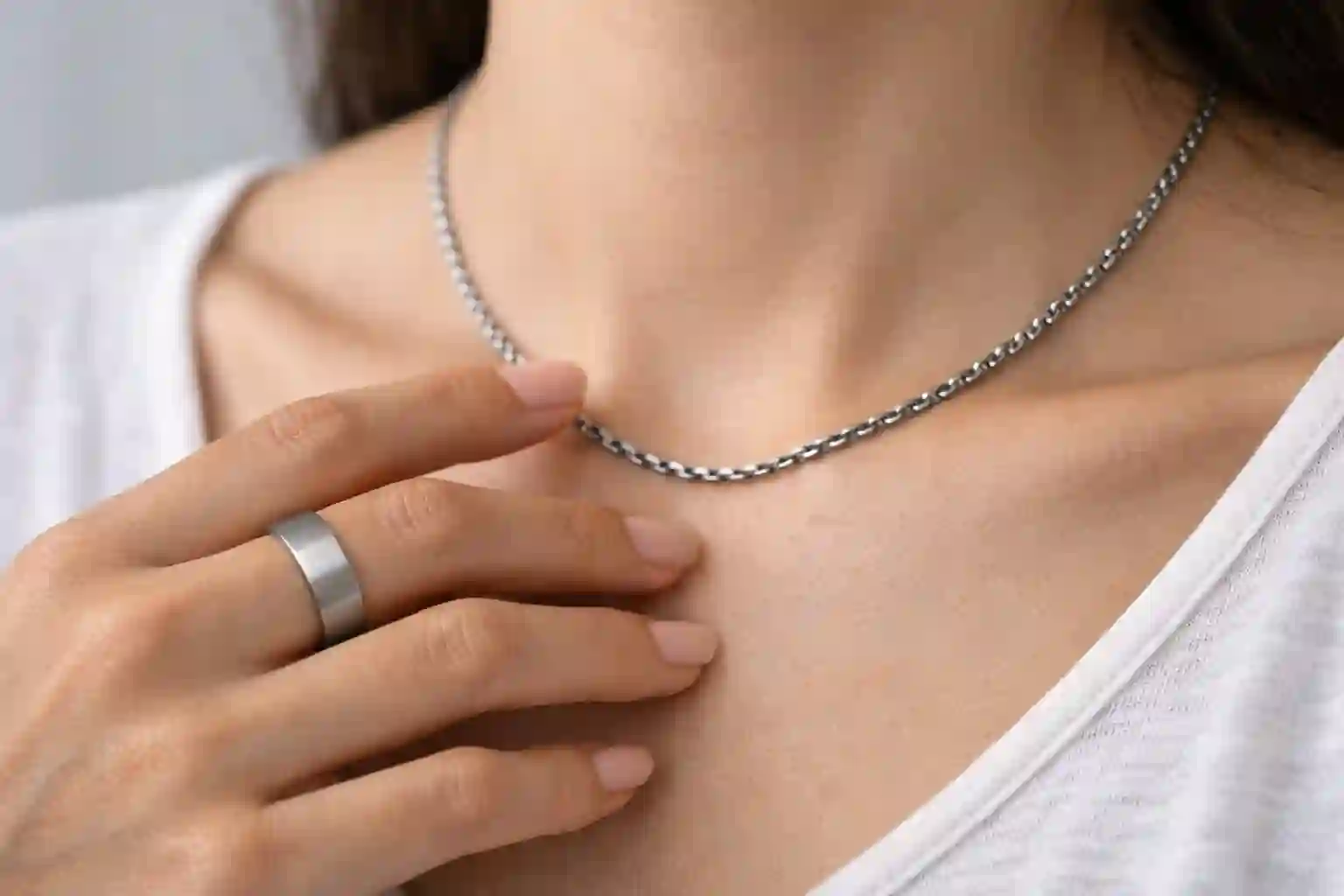
Because of that, titanium tends to work especially well for pieces that stay in constant contact with the skin, like chains, necklaces, or rings that are worn throughout the day. It’s also often a safer option for people who have had mixed experiences with stainless steel or plated jewelry in the past.
That said, not everything labeled as “titanium” is actually pure titanium. Some products use a thin titanium coating over another metal, which can behave very differently once that outer layer starts to wear. In those cases, skin reactions are still possible, so it’s worth checking how the material is described before buying.
How Titanium Holds Up in Daily Wear
One thing that stands out fairly quickly with titanium is how little attention it actually needs once you start wearing it regularly.
With a lot of other jewelry, there’s always something to keep in mind. You might avoid wearing it in the shower, take it off before workouts, or notice the finish starting to dull after a few weeks of daily use. Plated pieces especially tend to change over time, either fading slightly or reacting to sweat and humidity.
Titanium feels much more consistent in comparison.
In day-to-day use, it handles water, sweat, and changing weather conditions without much impact on how it looks or feels. Wearing a chain during a workout, washing your hands with a ring on, or spending time outdoors in humid air doesn’t really require a second thought. The surface doesn’t rust, and it doesn’t develop that worn or uneven look that some other materials gradually pick up.
That difference becomes more noticeable the longer you wear it. Instead of adjusting your habits around the jewelry, the piece simply fits into your routine. There’s no real need to polish it regularly or take it off just to keep it in good condition.
Over time, it’s these small things that end up mattering more than expected. Not having to think about maintenance, storage, or when to remove it makes titanium feel less like something you have to manage, and more like something you can just wear and forget about.
Does Titanium Scratch or Fade Over Time?
No material stays completely untouched with daily use, and titanium is no exception. If you wear it regularly, especially pieces like rings or chains, small marks will eventually show up.
The difference is in how those marks look over time.
With softer metals or plated jewelry, scratches often stand out. You might notice fading in certain spots, uneven color, or areas where the surface starts to wear through. Those changes tend to draw attention and can make a piece feel worn sooner than expected.
Titanium wears in a quieter way.
Instead of sharp or obvious marks, the surface develops fine, subtle lines that blend into the finish. There’s no coating to wear away, so you don’t get that contrast between layers or sudden changes in color. The overall look stays consistent, even as the piece picks up signs of use.
After a while, it starts to feel less like damage and more like a natural part of the material. The finish softens slightly, and the piece takes on a more lived-in look without losing its original character. For many people, that ends up feeling more reassuring than trying to keep something looking brand new all the time.
Titanium vs Stainless Steel Jewelry: Which Is Better?
This comparison comes up quite often, especially with terms like “titanium steel” appearing in many product listings. At a glance, both materials can look very similar, and both are generally considered durable. The differences usually become clearer after wearing them for a while.
Titanium feels noticeably lighter on the skin, even in thicker designs. That makes a difference for pieces you plan to wear throughout the day, such as chains or rings. Stainless steel, by comparison, has more weight to it. Some people prefer that solid feel, but over long periods, it can feel slightly more present.
Skin compatibility is where the gap becomes more obvious. Pure titanium is widely regarded as hypoallergenic, which means most people can wear it without irritation. Stainless steel is often safe as well, but many types contain small amounts of nickel. For people with sensitive skin, that can sometimes lead to mild reactions, especially with constant contact.
Over time, both materials hold up well, but they age differently. Stainless steel can develop subtle discoloration or changes in finish, particularly if it has been polished or coated. Titanium tends to stay more consistent in appearance. It doesn’t rely on a surface layer, so there’s no coating to wear away or expose a different material underneath.
Another point that often causes confusion is the term “titanium steel.” Despite the name, it usually refers to stainless steel that has been treated or colored to resemble titanium. It doesn’t offer the same properties as pure titanium, particularly when it comes to weight and skin compatibility.
In practical terms, stainless steel can be a perfectly reasonable choice for occasional wear or for those who prefer a slightly heavier feel. Titanium, on the other hand, tends to suit everyday use better, especially if comfort and low maintenance are priorities. The longer you wear it, the more those differences tend to stand out.
Quick Comparison: Titanium vs Stainless Steel Jewelry
[affiai asin=”B083THGLP6,B07Y7V4QR6″ count=”2″ template=”grid”]
|
Feature |
Titanium |
Stainless Steel |
|---|---|---|
|
Weight |
Very light |
Heavier |
|
Skin sensitivity |
Hypoallergenic |
May contain nickel |
|
Maintenance |
Very low |
Low to moderate |
|
Long-term appearance |
Stable |
May change slightly |
What to Look for When Buying Titanium Jewelry
Not all titanium jewelry feels the same once you start wearing it. Small details that are easy to overlook on a product page can end up making a noticeable difference in comfort, durability, and how the piece looks after a few months of use.
1. Material Type
The way titanium is used matters more than the name itself. Pieces described as “pure titanium” or “grade 2 titanium” are generally closer to what people expect from the material. They tend to be more consistent in color, less reactive on the skin, and more predictable over time.
Some products, however, use titanium as a coating or mix it with other metals. These can still look similar at first glance, but they may behave differently with daily wear, especially if the surface layer starts to wear down. Taking a moment to check how the material is described can help avoid that kind of mismatch.
2. Finish
The finish plays a surprisingly big role in how the jewelry ages. A polished surface looks clean and reflective when new, but it also makes small scratches easier to notice. Brushed or matte finishes, on the other hand, tend to soften those marks, so the piece keeps a more even look over time.
This doesn’t mean one is better than the other. It really depends on whether you prefer a sharper, more eye-catching appearance or something that stays visually consistent with daily use.
3. Weight and Thickness
Titanium is known for being lightweight, but the overall feel still depends on how thick the piece is. A thicker chain or ring can look more substantial and hold its shape better, while thinner designs feel more minimal and less noticeable during wear.
For something you plan to keep on most of the day, comfort often becomes more important than appearance alone. A piece that looks great but feels slightly bulky can end up being worn less often than expected.
4. Clasp or Closure
For necklaces and chains, the clasp is one of those details that only becomes important after a few days of use. A well-designed clasp should be easy to open and close without needing too much effort, while still staying secure during movement.
If the mechanism feels stiff, too small to handle comfortably, or loosely attached, it can quickly become a daily annoyance. It’s a small part of the design, but it has a direct impact on how practical the piece feels.
5. Intended Use
It helps to think about how the piece fits into your routine rather than just how it looks on its own. A simple chain worn every day needs to be comfortable, low-maintenance, and easy to pair with different outfits. A more decorative or heavier piece might not need the same level of practicality if it’s only worn occasionally.
Matching the design to how you actually plan to use it often makes a bigger difference than any single feature.
When Titanium Jewelry Might Not Be the Best Choice
Titanium works well for most everyday situations, but it doesn’t suit every preference or use case. In certain scenarios, other materials can still make more sense depending on what you’re looking for.
One of the more noticeable differences comes from how the material behaves during manufacturing. Titanium is strong and relatively rigid, which means it’s not as easy to shape into very intricate or highly detailed designs. Softer metals like gold or silver allow for finer craftsmanship, especially in pieces that rely on delicate patterns or more complex forms.
Resizing is another factor that often gets overlooked at the beginning. Unlike gold or silver rings, titanium is much harder to adjust once it has been made. For items like rings, where sizing can change over time, this can become a practical limitation. Some jewelers may not offer resizing at all, or the process can be more complicated than expected.
The feel of the material can also take a bit of getting used to. Titanium is significantly lighter than most traditional metals, which is part of its appeal. However, for those who associate weight with a sense of quality or presence, it may initially feel less substantial compared to stainless steel or gold.
None of these points are necessarily drawbacks on their own. They simply reflect the trade-offs that come with the material. For many people, the comfort, durability, and low maintenance of titanium outweigh these considerations. But if adjustability, intricate design, or a heavier feel are priorities, it’s worth keeping these differences in mind before making a decision.
Frequently Asked Questions
Can you wear titanium jewelry in the shower?
Yes, titanium handles water exposure very well. It does not rust or break down when exposed to moisture, whether that’s from showering, washing hands, or humid environments. Most people simply leave it on without needing to think about it.
That said, things like soap residue or hard water can still build up on the surface over time. A quick rinse and occasional wipe are usually enough to keep it looking clean.
Does titanium jewelry turn green or leave marks on skin?
No, titanium does not react with the skin in the way some other metals can. It won’t leave green or dark marks, even with prolonged contact.
Those marks are typically caused by metals like copper or certain alloys. Since pure titanium doesn’t contain those reactive elements, it tends to stay neutral against the skin.
Is titanium better than silver for daily wear?
For everyday use, titanium is generally easier to live with. It doesn’t tarnish, doesn’t require regular polishing, and holds up well under constant wear.
Silver, on the other hand, can develop a darker surface over time and usually needs occasional cleaning to maintain its appearance. If you prefer something low-maintenance, titanium often ends up being the more practical choice.
If you’re looking for options designed for everyday use, you can also explore some examples of daily wear titanium jewelry.
How long does titanium jewelry last?
With regular use, titanium jewelry can last for many years without significant changes in structure or appearance. It resists corrosion, doesn’t degrade easily, and doesn’t rely on coatings that can wear away.
Over time, you might notice very fine surface marks, especially on frequently worn pieces, but these tend to blend into the finish rather than stand out.
Can titanium jewelry rust or corrode?
No, titanium is highly resistant to corrosion. It naturally forms a protective oxide layer on its surface, which prevents rust and protects the metal underneath. This is one of the reasons it’s often used in medical and industrial applications as well.
Can you sleep with titanium jewelry on?
In most cases, yes. Because titanium is lightweight and resistant to moisture, many people wear it continuously without discomfort.
However, for chains or larger pieces, it can still be a good idea to remove them occasionally to avoid tangling or unnecessary wear.
What is “titanium steel” jewelry?
Despite the name, “titanium steel” usually refers to stainless steel that has been treated or colored to resemble titanium. It does not offer the same properties as pure titanium, especially in terms of weight and skin compatibility.
Final Thoughts
Jewelry that stays on day after day ends up being judged a little differently. It’s not just about how it looks when it’s new, but how it feels after hours of wear, how it holds up in small daily moments, and whether it quietly fits into your routine without needing much attention.
That’s where titanium tends to stand out.
It doesn’t ask for much. There’s no need to think about taking it off around water, no concern about skin reactions, and no gradual change in color that needs to be corrected later. Over time, it simply remains what it was from the start, which is often more valuable than it sounds at first.
Looking at it from that perspective makes the choice feel less about style alone and more about long-term comfort and consistency. And in many cases, that’s what determines whether a piece ends up being worn occasionally or becomes something you keep on without thinking about it.