
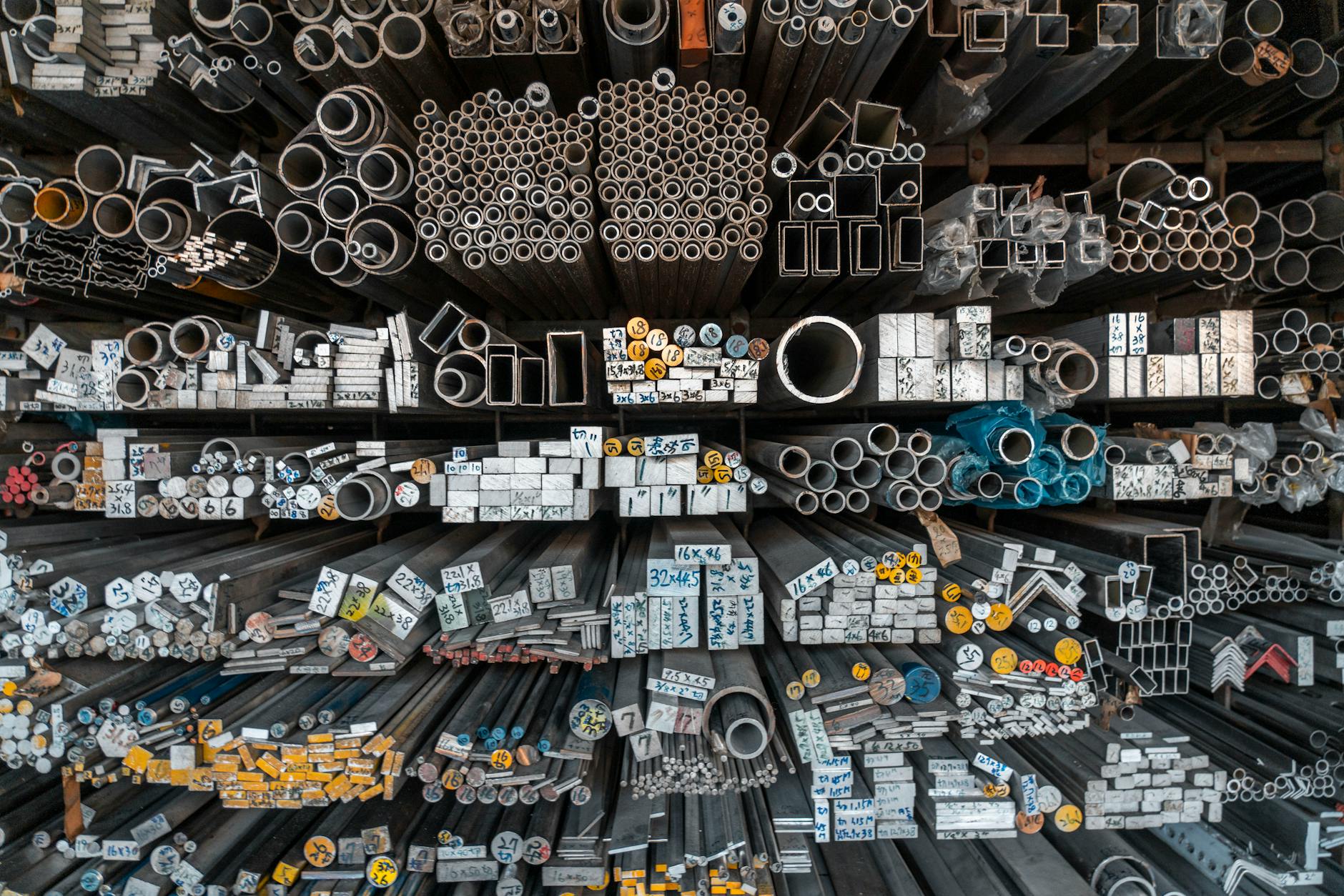
Titanium Density Explained: g/cm³, Strength-to-Weight, and How It Compares to Aluminum, Steel & Copper
Ever picked up a titanium camping mug and wondered why it feels lighter than a steel mug but heavier than an aluminum one? Or seen a watch case labeled titanium and wondered what that really means for weight, strength, and everyday use. “Density” is the key word. Understanding titanium density explains a lot about how titanium behaves in products you use every day, from cookware to bicycles.
Quick answer: what titanium density means and why it matters
Titanium’s density is about 4.5 grams per cubic centimeter for commercially pure titanium and roughly 4.4 grams per cubic centimeter for common alloys such as Ti-6Al-4V. Density measures how much mass is packed into a given volume. For consumers, density affects weight, feel, and the strength-to-weight trade-offs that make titanium useful for camping gear, watches, medical implants, and aerospace parts.
What is density, in plain terms?
Density tells you how heavy something is for its size. If two objects are the same size but one weighs more, it has higher density. For metals, density is usually expressed in grams per cubic centimeter or kilograms per cubic meter. Density is a basic material property that helps predict weight, buoyancy, and how a material performs when you try to make something light and strong.
Why density matters for real products
- Weight of the final product. Lower density means less mass for the same volume. That is why titanium is popular in hiking cookware and EDC gear when weight matters.
- Strength-to-weight ratio. Density alone is not the whole story. A metal that is moderately dense but very strong can outperform a lighter but weaker metal for load-bearing parts.
- Size and design choices. If a material is less dense, designers can use thicker sections without too much weight penalty, improving stiffness or durability.
- Perceived quality and feel. Heft matters to buyers. Watches and jewelry makers balance weight and comfort by using titanium that feels substantial without being heavy.
How dense is titanium compared with other common metals?
Below is a simple comparison that helps place titanium on the familiar spectrum from very light metals to very heavy ones.
| Material | Density (g/cm3) | Practical note |
|---|---|---|
| Magnesium | 1.74 | Very light, used when weight is critical but strength is limited |
| Aluminum | 2.70 | Popular for lightweight parts, cheaper and more conductive than titanium |
| Titanium (commercially pure) | 4.51 | Balanced weight and strength, excellent corrosion resistance |
| Ti-6Al-4V (common alloy) | 4.43 | Alloyed to raise strength while keeping similar density |
| Carbon steel | 7.85 | Heavier but usually cheaper and easy to form |
| Stainless steel (300 series) | 7.9–8.0 | Widely used for cookware and structural parts |
| Copper | 8.96 | High density and excellent electrical conductivity |
| Nickel | 8.90 | Dense and corrosion resistant in certain environments |
| Tungsten | 19.25 | Extremely dense, used where mass in a small volume is required |
What that comparison means practically
Titanium is heavier than aluminum but significantly lighter than steel. That middle position combined with high strength and corrosion resistance explains why titanium is chosen when weight savings matter but aluminum would be too weak or too soft for the application.
For practical camping gear choices, Titanium vs Stainless Steel Cookware covers trade-offs in weight, durability, and cooking performance.
How density and strength work together: the strength-to-weight story
For many consumer decisions, comparing density by itself is incomplete. What matters is how much load a material carries relative to its weight. That ratio is called the strength-to-weight ratio. Titanium has a high strength-to-weight ratio compared with most steels and aluminum alloys. That is the practical reason titanium shows up in high-performance bikes, aircraft parts, and camping carabiners.
Examples that illustrate the point
- Two backpacking pots of the same size: a titanium pot will be lighter than a steel pot and stronger than an aluminum pot with the same thickness.
- A bicycle frame: a titanium frame can be thinner and lighter than steel while offering similar stiffness and better fatigue resistance in many cases.
- A watch case: titanium lets designers keep a slim profile while maintaining structural integrity and scratch resistance close to stainless steel.
Why titanium alloys can have different densities
Pure titanium and titanium alloys have similar densities, but alloying elements such as aluminum and vanadium alter both density and mechanical performance. The changes are not dramatic in density, but they can have a big effect on strength, toughness, and how the material responds to heat treatment.
Common titanium grades and their typical uses
| Grade | Short description | Typical applications |
|---|---|---|
| Grade 1 (CP) | Highest corrosion resistance, relatively low strength | Chemical plant parts, marine fittings |
| Grade 2 (CP) | Good balance of strength and corrosion resistance | Aerospace components, fasteners, medical instruments |
| Grade 4 (CP) | Higher strength among commercially pure grades | Surgical implants, high-strength fasteners |
| Grade 5 (Ti-6Al-4V) | Workhorse alloy with much higher strength | Aerospace, high-performance bicycle frames, medical implants |
| Grade 9 (Ti-3Al-2.5V) | Good formability with improved strength | Bike tubing, surgical tools |
| Grade 23 (Ti-6Al-4V ELI) | Extra low interstitials for enhanced fracture toughness | Implants and surgical devices |
The densities of those grades are all close to the 4.4 to 4.5 g/cm3 range. The real differences come in strength, toughness, and how they respond to heat and fabrication.
Does manufacturing change effective density?
Yes. The theoretical density of titanium is a material constant, but the density of a finished part depends on how it was made. Casting or powder-based processes can introduce porosity. Additive manufacturing, also called 3D printing, can produce parts with internal voids unless the process is optimized. Fabrication steps such as hot isostatic pressing, forging, or rolling reduce porosity and bring the final density closer to the theoretical value.
Practical consequences for consumers
- A 3D-printed titanium cup might weigh slightly less than a forged one if it contains internal porosity, but it may also be weaker.
- High-quality aerospace or medical parts are typically fully densified and nearly indistinguishable from wrought material in density and strength.
- Lower-cost or decorative titanium items may use thinner sections or leave small voids that reduce weight at the expense of durability.
How temperature and environment affect density in everyday use
For typical consumer uses, temperature changes have a negligible effect on titanium density. All metals expand when heated and contract when cooled, so density shifts slightly with temperature. Those changes are only important in precision engineering applications such as aerospace or high-precision instruments. For a camping pot, watch case, or jewelry item you can ignore thermal expansion in terms of density.
Corrosion, surface oxide, and what that means for weight and longevity
Titanium naturally forms a thin oxide layer on its surface that protects it from corrosion. That oxide layer is extremely thin, measured in nanometers, and does not significantly change the overall mass or density of an object you can hold. What matters more is that the oxide improves durability, which can affect how long a lightweight titanium product remains serviceable compared with alternatives.
Galvanic interactions
Titanium is corrosion resistant by itself, but in contact with dissimilar metals in a conductive environment, galvanic corrosion can occur. This does not change titanium density, but it can damage other metals or compromise fasteners. Designers take that into account when combining titanium with stainless steel, aluminum, or copper in products.
How density affects common titanium products
Camping cookware and utensils
Titanium cookware is popular because it offers a clear weight advantage over steel. Compared with aluminum, titanium is heavier for the same geometry. Cookware designers compensate by making titanium pots thinner, which saves weight but reduces heat distribution. That is why many backpackers prefer titanium pots for solo trips where weight is the priority, while groups that need even heating choose aluminum or anodized aluminum cookware.
Watches and jewelry
Titanium watch cases and bracelets often feel lighter on the wrist than stainless steel. The reduced weight improves comfort, while good corrosion resistance and hypoallergenic properties make titanium a strong choice for skin-contact items. Watchmakers often mix finishing techniques to add perceived weight through design so the piece still feels substantial.
Bicycles and sports equipment
Titanium bike frames remain popular among riders who value a smooth ride, corrosion resistance, and longevity. Density helps here because it allows designers to get high stiffness and fatigue resistance without excessive mass. For lower-cost or ultra-lightweight bikes, carbon fiber or aluminum may be chosen instead, each with different trade-offs in stiffness, comfort, and repairability.
Medical implants
Titanium and certain titanium alloys are widely used for implants such as hip stems and dental implants. The combination of relatively low density and biocompatibility means implants can be strong without adding unnecessary mass. Implant designers pick specific grades for mechanical properties and for how the surface interacts with bone and tissue.
Trade-offs: why titanium is not always the best choice
| Advantage | Practical downside |
|---|---|
| Lightweight versus steel | More expensive raw material and processing |
| High strength-to-weight ratio | More difficult to machine and join than aluminum |
| Excellent corrosion resistance | Can cause galvanic issues with some metals |
| Hypoallergenic | Surface scratches are visible and can be harder to polish out than for some steels |
Those trade-offs are why manufacturers choose titanium selectively. For parts where weight, corrosion resistance, or biocompatibility are priorities, titanium often wins. For low-cost, mass-produced items or where thermal conductivity matters, aluminum or steel may be better.
Common misconceptions about titanium density explained
- Misconception: Titanium is the lightest metal. Reality: Many metals such as magnesium and aluminum are lighter than titanium. Titanium is valued because it balances light weight with strength and corrosion resistance.
- Misconception: Titanium is always lighter than steel. Reality: Titanium is lighter by density, but a steel part can be made lighter if designed differently. Conversely, a thick titanium item can weigh more than a thin steel piece.
- Misconception: All titanium is the same. Reality: Different grades and alloys have different mechanical properties even though their densities are similar. The right grade depends on the use case.
- Misconception: Titanium is indestructible. Reality: Titanium is durable but not immune to wear, impact damage, or corrosive environments combined with certain metals.
Safety considerations when working with titanium
Titanium metal itself is not toxic and is biocompatible in many grades. That makes it safe for implants and jewelry. However, there are safety issues during manufacturing and machining that consumers should be aware of.
Cutting, grinding, and dust hazards
Fine titanium dust and chips created during machining can be flammable in air. Shops use appropriate ventilation, dust control, and spark-free procedures to reduce risk. For consumers using small hand tools at home, avoid creating clouds of titanium dust and keep ignition sources away from machining debris.
Welding and heat
Welding titanium requires inert gas shielding because at high temperatures titanium reacts with oxygen, nitrogen, and hydrogen. Improper welding can embrittle the metal. That is a concern for fabricators rather than end users, but it is worth noting if you plan custom repairs or modifications.
Allergies and skin contact
Most people tolerate titanium well. It is commonly used where nickel allergies are a concern because titanium does not contain nickel and is less likely to cause contact dermatitis.
Maintenance and care: keeping titanium products in good shape
Titanium needs less maintenance than many metals, but it is not maintenance-free. The type of product determines care steps.
Everyday cleaning
For watches, jewelry, and cookware, clean titanium with warm water, mild soap, and a soft brush or cloth. Avoid strong acids and abrasive pads that can scratch or change finishes.
Removing scratches
Light surface scratches on titanium can be polished out by a competent jeweler or watchmaker. Deep scratches may require professional refinishing. Some manufacturers use bead blasting or brushed finishes to hide minor wear and to make scratches less obvious.
Anodizing for color and protection
Anodizing is an electrochemical process that thickens the natural oxide on titanium. It changes the way light interacts with the surface so you get color without paint. Anodized colors are not pigments but optical effects created by oxide thickness. Anodizing does not meaningfully change the underlying density or mass of a part.
Manufacturing overview: how raw titanium becomes products
Titanium production begins with ore such as rutile and ilmenite. Through chemical processing, titanium is converted into a porous metal called sponge. The sponge is melted and refined into ingots, then worked by forging, rolling, or extrusion to make sheet, bar, and tube. All those steps are energy intensive, which contributes to titanium’s price compared with steel and aluminum.
How processing affects the final product
- Forging and rolling improve strength and reduce porosity, giving near-theoretical density and good mechanical properties.
- Powder metallurgy and additive manufacturing offer complex shapes and material efficiency but often require additional densification steps for the same performance.
- Heat treatment and surface finishing influence hardness, corrosion resistance, and how a piece ages over time.
Choosing between titanium and other materials: a practical checklist
If you are deciding whether to choose titanium for a product, consider these factors.
- Is weight a major concern? If yes, titanium may be a good fit, especially versus steel. Against aluminum, compare the required strength and stiffness.
- Is corrosion resistance essential? For marine or high-humidity environments, titanium performs very well.
- Is cost a limiting factor? Titanium is usually more expensive. Ask whether performance gains justify the price.
- Will the item be repaired or machined later? Titanium can be harder to work with for small shops, so check repair options.
- Is biocompatibility needed? For implants or long-term skin contact, titanium is often preferable thanks to low allergenicity.
Practical takeaways: what to remember about titanium density
- Titanium’s density is about 4.4 to 4.5 g/cm3. That makes it heavier than aluminum but much lighter than steel and copper.
- Density alone does not determine usefulness. Titanium shines when its strength-to-weight ratio and corrosion resistance matter.
- Different titanium grades have similar densities but very different strengths and uses. Choose the grade for the application, not just because it says “titanium.”
- Manufacturing method affects the effective density and durability of a finished part. Fully processed, high-quality parts will approach the theoretical density and performance.
- Titanium is safe for skin contact and implants, but machining dust and welding fumes require professional handling.
FAQ
1. What is the numeric density of titanium?
Titanium’s density is about 4.51 grams per cubic centimeter for commercially pure titanium. Common titanium alloys, such as Ti-6Al-4V, have densities around 4.43 grams per cubic centimeter.
2. Is titanium lighter than steel and aluminum?
Titanium is lighter than steel for the same volume, and heavier than aluminum. The real comparison should be strength-to-weight. Titanium often outperforms steel at lower weight and outperforms aluminum in strength for the same mass.
3. Will a titanium camping pot always be lighter than an aluminum one?
Not necessarily. Titanium pots are commonly thinner to save weight and are often lighter than steel pots. Compared with aluminum, titanium pots may be heavier for the same shape. Designers compensate with thickness and geometry to reach the desired balance of weight, durability, and heat performance.
4. Do different titanium grades change density significantly?
No. The densities of common titanium grades and alloys are all within a narrow range around 4.4 to 4.5 g/cm3. The grades differ much more in strength, ductility, and corrosion resistance than in density.
5. Is titanium magnetic?
Pure titanium is essentially nonmagnetic. Some titanium alloys or work-hardened pieces can show slight magnetic response, but for most consumer uses titanium behaves as a nonmagnetic material.
6. Does anodizing change titanium density or strength?
Anodizing changes only a very thin surface layer and does not meaningfully change the density or structural strength of the part. It does add color and can improve surface corrosion resistance in certain conditions.
7. Can I safely machine titanium at home?
Small machining jobs are possible, but be aware that titanium chips and dust can be hazardous because they can ignite under certain conditions. Use appropriate ventilation, dust collection, and avoid creating fine airborne dust. For larger projects consult a professional machine shop experienced with titanium.
8. How should I pick titanium for a purchase?
Decide whether weight savings, corrosion resistance, hypoallergenic properties, or longevity are the key priorities. Compare titanium to aluminum and stainless steel based on those priorities. When in doubt, check the specific grade and manufacturing method used for the product.
Final practical insight
Think of titanium density as one piece of a larger decision. It explains why titanium feels the way it does and why it is chosen for certain gear. For consumers, the important questions are what you need from the product and whether titanium’s balance of low density, high strength, and corrosion resistance justifies a higher price. When weight, durability, or biocompatibility matter, titanium often makes sense. For purely low-cost or high-thermal-conductivity needs, other metals may be a better fit.



