
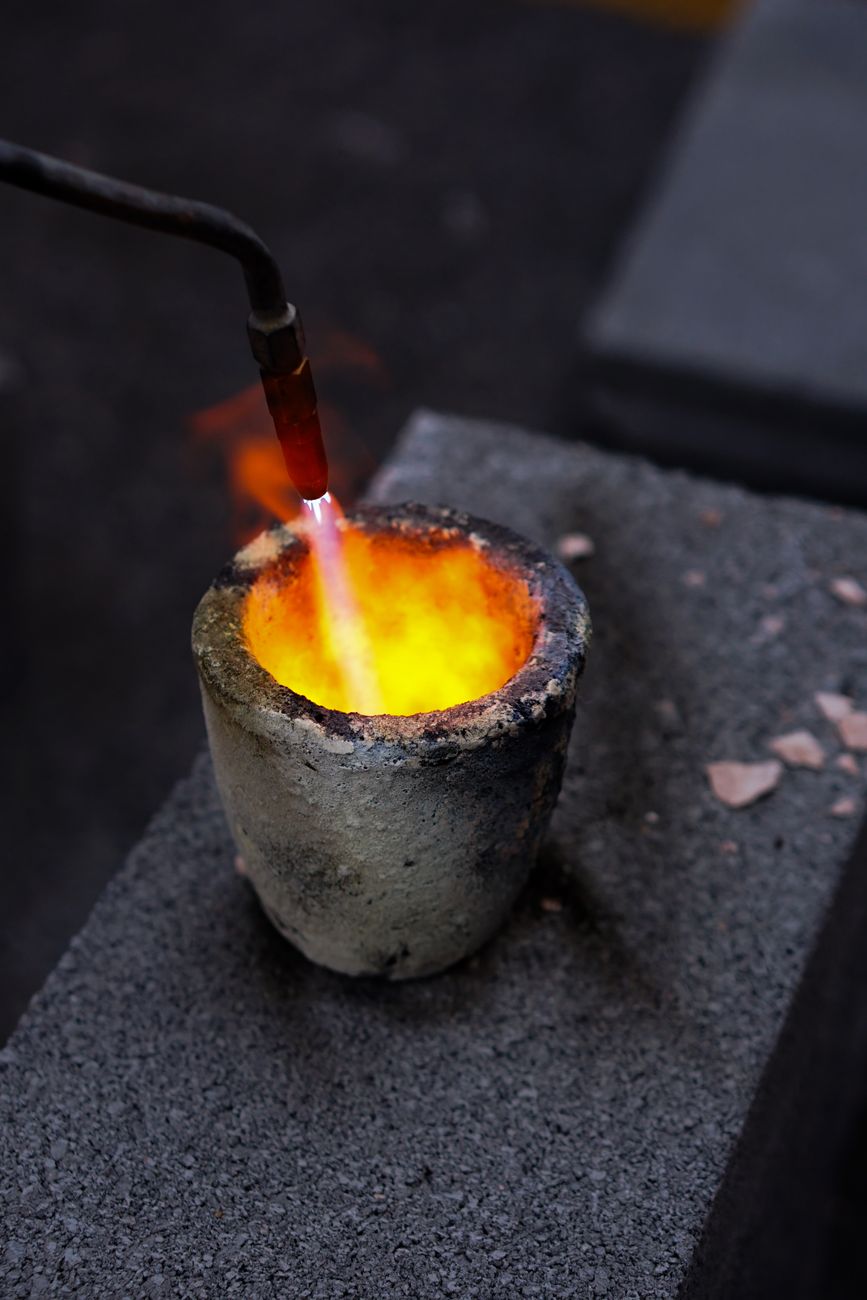
Titanium Melting Point Explained: 1668°C (3034°F) — What That Means for Welding, Camping & Cookware
Have you ever wondered whether titanium will melt, burn, or change color if you hold it over a camp stove or try to solder it at home? People search for this when they worry about cookware, camping gear, jewelry, or metalworking projects. The way titanium behaves when heated matters for manufacturing, product care, and safety. This article explains what the titanium melting point actually means, why it matters in real-world use, and what to watch out for when heating or working with titanium.
Quick answer: the titanium melting point explained
Titanium melts at about 1668 degrees Celsius, which is roughly 3034 degrees Fahrenheit. That high melting point makes titanium much more heat-resistant than aluminum and most steels. However, melting is only part of the story. Titanium reacts with oxygen and nitrogen at elevated temperatures, changes crystal structure around 882 degrees Celsius, and behaves differently when alloyed, cast, welded, or used as thin sheet. Those factors often matter more for products and manufacturing than the absolute melting temperature.
Why the melting point matters in plain terms
The melting point is a useful reference for how hot you must get titanium before it becomes liquid. For everyday users, that answers things like whether titanium cookware will melt on a camping stove or whether titanium jewelry can be reshaped with a torch.
- For camping and cookware: Typical stoves and campfires do not get close to titanium’s melting point, so melting is not the common risk. Surface changes, oxidation, and structural weakening can occur at far lower temperatures.
- For manufacturing and welding: Knowing the melting point influences the choice of melting processes, shielding atmosphere, and equipment. Titanium requires vacuum or inert gas melting to avoid contamination.
- For safety and handling: Titanium dust and fine turnings are flammable. High melting point does not mean titanium powder is safe around sparks.
Basic science without the jargon
Titanium is a metal element with atomic number 22. When you heat a solid metal, its atoms vibrate more until they break their fixed positions and the material becomes liquid. The temperature where that happens for titanium is about 1668 degrees Celsius.
For cookware comparisons on outdoor use, consider Titanium vs Stainless Steel Cookware for weight, durability, and heat behavior.
There are two other thermal facts worth knowing because they show behavior that affects real uses:
- Phase change below melting: Pure titanium changes crystal structure at about 882 degrees Celsius. That change affects hardness and how the metal responds to heat treatments and welding.
- Reactivity with air: At high temperatures titanium reacts readily with oxygen, nitrogen, and carbon. That can make the surface brittle or form colored oxide layers even though the metal is far below its melting point.
How titanium compares to other common metals
Comparing melting points makes the number easier to understand. The table below shows rough melting temperatures for metals you may encounter when choosing materials or comparing fabrication needs.
| Metal | Approximate melting point | Why this matters |
|---|---|---|
| Titanium | About 1668°C (3034°F) | High; needs vacuum or inert atmosphere for melting to avoid contamination |
| Aluminum | About 660°C (1220°F) | Much lower; easy to melt with simple furnaces or torch |
| 304 Stainless steel | Approximately 1400–1450°C (2550–2640°F) | Lower than titanium, but still needs substantial heat for melting |
| Iron | About 1538°C (2800°F) | Closer to titanium but still lower |
| Tungsten | About 3422°C (6192°F) | Extremely high melting point used for extreme-temperature applications |
What influences titanium’s melting behavior
The melting point quoted for pure titanium is a baseline. Several practical factors change how titanium behaves when heated.
Alloying elements
Most commercial titanium is alloyed. Common alloys like Ti-6Al-4V include aluminum and vanadium. Alloying shifts mechanical properties and may change the melting range slightly. Alloys can have a melting range instead of a single sharp temperature. For practical work, alloying can affect casting behavior, weldability, and how the metal responds to heat treatment.
Impurities and interstitial elements
Oxygen, nitrogen, carbon, and hydrogen can enter titanium at high temperatures and change both surface and bulk properties. A small increase in these elements can cause embrittlement and reduce ductility. That is why melting and heat treatment are done in vacuum or inert gas and why welds must be protected from air.
Microstructure and phase transitions
Titanium has two crystallographic forms. Below the alpha-beta transition temperature—about 882 degrees Celsius—titanium is in the alpha phase. Above that temperature it converts to beta phase. That transformation is important because cooling rates, alloying elements, and heat treatments determine whether the resulting metal is tougher, stronger, or more brittle.
Scale and geometry
Thin sheets, wires, and powders behave differently from massive ingots. Thin sheet will heat and oxidize much faster, and powders can ignite. Melting small parts may be easier to begin but increases the chance of contamination or burning.
How titanium is melted and processed industrially
Titanium’s reactivity and high melting point mean you do not melt it in an open crucible the way you might melt aluminum. Industry uses specialized methods that control atmosphere, remove impurities, and manage thermal stresses.
Primary production: the Kroll process
Raw titanium metal usually comes from ore that is chemically reduced in complex processes such as the Kroll process. That is part of why titanium is more expensive than common metals. The Kroll process produces a metal sponge that is then melted and refined.
Vacuum melting techniques
Commercial titanium ingots and billet are often made by vacuum arc remelting or electron beam melting. Both methods use vacuum to prevent oxygen and nitrogen pickup. Cold hearth melting is another technique used to remove inclusions and improve purity.
Powder metallurgy and additive manufacturing
Powder bed fusion using lasers or electron beams has become common for complex titanium parts. Those processes still need strict control of powder handling because fine titanium powder is reactive. Additive methods are attractive because they reduce waste and allow shapes hard to cast or machine.
Forging, rolling, and heat treatment
After melting, titanium is formed by hot working at controlled temperatures, often in protective atmospheres. Heat treatments adjust strength and toughness by controlling the alpha and beta phases.
Welding and joining: considerations tied to melting
Welding titanium is possible and widely done in aerospace and manufacturing, but it requires strict shielding and temperature control.
- Shielding gas: Welding must be performed in pure argon or helium to keep oxygen, nitrogen, and hydrogen away during the weld and the immediate cool-down.
- Temperature control: Heat input and cooling rate affect microstructure. Overheating or exposure to air while hot can make the weld zone brittle.
- Brazing and soldering: These techniques are possible when appropriate filler materials are used, but they also require cleanliness and controlled atmospheres.
Common real-world questions answered
Will titanium melt on a camp stove?
No, titanium will not melt on a typical camp stove. Most camping stoves reach a few hundred degrees Celsius up to perhaps 1000°C in extreme short-term spots. That is well below the melting point. However, thin titanium items can oxidize, color, warp, or become weaker well below the melting temperature. Also, extreme localized heating in pure oxygen could cause reactive changes.
Can titanium burn?
Fine titanium dust, turnings, and powder can ignite and burn easily. Bulk titanium does not spontaneously burn under normal conditions. When titanium burns, it reacts with oxygen to form oxides and releases a lot of heat. That is why machining and powder handling require strict controls.
Is titanium safe for cookware and food contact at high heat?
Titanium is widely used for cookware because it is lightweight and corrosion resistant. It will not melt during normal cooking. Surface discoloration from oxidation can occur at high heat, and aggressive conditions like dry heating of an empty pot or prolonged exposure to direct flame can change the appearance or surface properties. For normal use, titanium is considered safe for food contact.
How melting point affects product choices
When you consider a titanium product, think less about the melting point number and more about how the metal behaves at the temperatures the product will actually see.
- Camping cookware: You can rely on titanium not to melt. Choose thicker walls if you worry about warping or hot spots. Avoid overheating empty titanium pots.
- Jewelry and watches: Melting point impacts manufacturing, but consumer exposure to heat is negligible. Brazing, finishing, and cleaning of jewelry should be done by professionals with appropriate equipment.
- Bicycle frames and structural parts: Welding and heat treatment are major concerns. Properly processed titanium frames retain strength because manufacturers control heat and atmosphere during joining.
- Medical implants: Melting point is not a direct factor for implants in the body. The material’s biocompatibility, mechanical properties, and surface treatments are the main considerations. High-temperature processing ensures purity and desired microstructure.
Titanium grades and melting behavior
There are multiple commercially used titanium grades. Melting point differences between grades are small compared with the other differences in mechanical and thermal behavior. The table below summarizes common grades and practical applications.
| Grade | Type | Typical uses | Notes on heat behavior |
|---|---|---|---|
| Grade 1 | Commercially pure (CP) | Corrosion-resistant parts, chemical industry | Good ductility, lowest strength of CP grades; heat treatment rarely used to raise strength |
| Grade 2 | Commercially pure (CP) | General-purpose structural and chemical components | Most commonly used CP grade; balances formability and strength |
| Grade 4 | Commercially pure (CP) | High-strength corrosion resistance, medical components | Higher strength than Grade 1 and 2; can be cold worked |
| Ti-6Al-4V (Grade 5) | Alpha-beta alloy | Aerospace parts, medical implants, high-performance components | Most widely used alloy. Responds to heat treatment and forging. Melting and welding require controlled atmosphere |
| Beta alloys (e.g., Ti-13V-11Cr-3Al) | Beta-stabilized | Specialized applications requiring high strength and formability | Heat treatment controls properties; care needed with welding |
Practical manufacturing challenges tied to the high melting point
The high melting point contributes to several production realities that affect cost and availability.
- Equipment and energy: Reaching melting temperatures requires more robust furnaces and energy, often under vacuum, which raises cost.
- Inert or vacuum atmosphere: Because titanium picks up oxygen and nitrogen at high temperatures, melting and heat treatment typically require vacuum or inert gas, adding complexity.
- Contamination control: Crucible and electrode interactions can introduce impurities. Specialized melting techniques help reduce inclusions.
- Machining and finishing: Titanium work-hardens and is tough; machining generates heat and fine chips that create handling hazards.
Safety considerations when heating or working with titanium
Safety is not just about the melting point. Here are the main risks and safe practices to follow.
Dust and powder hazards
Fine titanium powder, shavings, and turnings can ignite and burn vigorously. Proper housekeeping, grounding to avoid static, inert gas storage for large batches, and specialized extinguishing agents are required in industrial settings.
High-temperature reactions
At elevated temperatures, titanium can react with oxygen, nitrogen, and carbon. That may make the metal brittle or ruin welds. Work involving heat should use adequate shielding, and any heating should avoid exposure to air at critical temperatures.
Welding precautions
Welders use clean surfaces, backing gas, and post-weld cleaning to avoid contamination. Welding in open air without proper protection will degrade mechanical properties at and near the weld.
Handling and storage
Store powders and fines separately from ignition sources. Bulk titanium and finished items are not hazardous in normal handling, but machining operations must be managed to control swarf and dust.
Common misconceptions about titanium and heat
Here are some frequent misunderstandings and the corrected view.
- Myth: Titanium is indestructible. Reality: Titanium is durable and corrosion resistant, but it can be oxidized, embrittled by interstitial contamination, or damaged by improper welding.
- Myth: Titanium will melt in any fire. Reality: Ordinary fires and most domestic situations do not reach titanium’s melting point. However, titanium can still discolor or oxidize at much lower temperatures.
- Myth: If titanium has a high melting point, powders are safe. Reality: Titanium powder is dangerous and can ignite when dispersed in air or exposed to sparks.
- Myth: All titanium alloys behave the same when heated. Reality: Alloy composition and processing history profoundly affect heat response, weldability, and mechanical properties after heating.
Care and maintenance tips related to heat
For consumers with titanium gear, simple practices reduce heat-related issues.
- Avoid prolonged dry heating of empty titanium cookware on high flame. Rapid temperature swings can lead to discoloration and warping.
- Allow special finishing and welding to be done by professionals who use proper shielding gas and controlled atmospheres.
- When using a torch or flame near jewelry, remove it. Localized heating can change surface color and microstructure.
- Keep titanium powders and fine chips away from heat and sparks. Clean machining areas regularly and store shavings safely.
Practical examples to illustrate the concepts
Seeing how melting point and high-temperature behavior matter in everyday products helps make this concrete.
Camping pot
A titanium pot will not melt on a camp stove. But if you place an empty titanium pot directly over a high campfire for a long time you may see color changes from oxidation, and the thin walls may warp. A thicker-walled titanium pot will tolerate heat better and resist warping, but it will be heavier.
Watch case
Watchmakers use titanium for cases because of its light weight and corrosion resistance. Heat used during manufacturing is controlled to preserve surface finish and mechanical properties. Home attempts to solder or reshape a titanium watch case are not advisable.
Bicycle frame
Titanium frames are welded and heat treated during manufacture. The melting point means the factory must use proper welding practices to avoid embrittlement in critical joints. For consumers, the takeaway is to buy from reputable manufacturers who follow industry best practices.
When melting titanium is necessary and how it is done safely
Only specialized facilities should melt titanium. Processes are engineered to remove impurities and control atmosphere.
- Electron beam melting in vacuum: Melts material using focused electron beams inside a vacuum chamber, producing high-purity ingots and powder for additive manufacturing.
- Vacuum arc remelting: Uses an electric arc in vacuum to refine and homogenize ingots, reducing inclusions.
- Cold hearth melting: Permits the removal of high-density inclusions in a controlled environment.
How melting point influences product cost
Titanium’s high melting point and chemical reactivity raise manufacturing complexity. The need for vacuum or inert atmosphere melting, specialized remelting equipment, careful machining, and safety measures for powders all contribute to higher material costs compared with metals like aluminum or mild steel. That is a practical reason titanium products tend to cost more.
Practical takeaways
- The number: Titanium’s melting point is about 1668°C or 3034°F.
- Melting is rarely the consumer issue: Surface oxidation, discoloration, warping, and embrittlement from contamination are more common concerns at much lower temperatures.
- Welding and melting require controlled atmosphere: To avoid oxygen and nitrogen pickup, manufacturers use vacuum or inert gas processes.
- Powder is hazardous: Fine titanium powder and shavings can ignite and must be handled carefully.
- Choose reputable manufacturers: For welded or heat-treated titanium products, manufacturing quality matters more than raw melting point.
FAQ
Will titanium melt in a house fire?
No, typical house fires do not reach titanium’s melting point. However, extreme structural fires can create localized conditions that may damage or weaken titanium components. Surface oxidation and loss of mechanical properties can occur well below the melting temperature.
Can I melt titanium at home with a torch?
No, melting titanium safely requires specialized equipment, vacuum or inert atmospheres, and strict contamination control. Attempting to melt titanium at home is dangerous and likely to produce a contaminated, brittle product.
Does heating titanium change its color?
Yes. Heating titanium in air creates oxide layers that refract light differently and cause colors from straw to blue, purple, and black. These colors often appear well below melting temperatures and are a surface effect rather than a change in bulk properties.
Is titanium powder used in 3D printing safe?
It can be used safely in controlled industrial environments with strict handling, ventilation, and fire-suppression protocols. However, titanium powder is flammable and poses inhalation hazards, so it is not safe for casual or home use.
Does alloying titanium significantly change the melting point?
Alloying can change the melting range modestly and affects solidification behavior, but differences in melting point are usually small compared with the base value for pure titanium. What changes more dramatically are mechanical properties, weldability, and the temperatures at which phase transformations occur.
Will titanium cookware withstand direct flame?
Yes, titanium cookware will not melt under normal direct flame from camping stoves or gas burners. Prolonged overheating, especially of empty pans, can cause discoloration, surface oxidation, and potential warping. Follow manufacturer guidance for heat limits.
Can titanium be recycled after melting?
Yes, titanium is recyclable. Recycling involves melting and refining processes similar to primary production and requires controlled atmospheres to maintain material quality. Recycled titanium reduces waste but still must be managed carefully during remelting to control impurities.
Final practical guidance
Remembering a single number is useful, but for most decisions about titanium products the practical question is how the metal behaves at the temperatures something will actually see. For camping and everyday use, melting is not a realistic risk, but oxidation, discoloration, and warping can occur at lower temperatures. For manufacturing and repair, proper atmosphere control, welding technique, and knowledge of alloy behavior matter a great deal. If you are buying titanium goods, focus on quality of manufacture and the supplier’s processes, and if you work with titanium in a shop, treat powders and hot surfaces with respect and the correct safety controls.



