Titanium vs Stainless Steel Cookware: Which Is Better for Camping?
When planning meals outdoors, the cookware you pack can make a surprising difference in your camping experience. Camp cooking is very different from cooking at home. Weight matters more, durability becomes essential, and cleaning options may be limited. The right cookware helps you prepare meals quickly and efficiently without adding unnecessary bulk to your backpack.
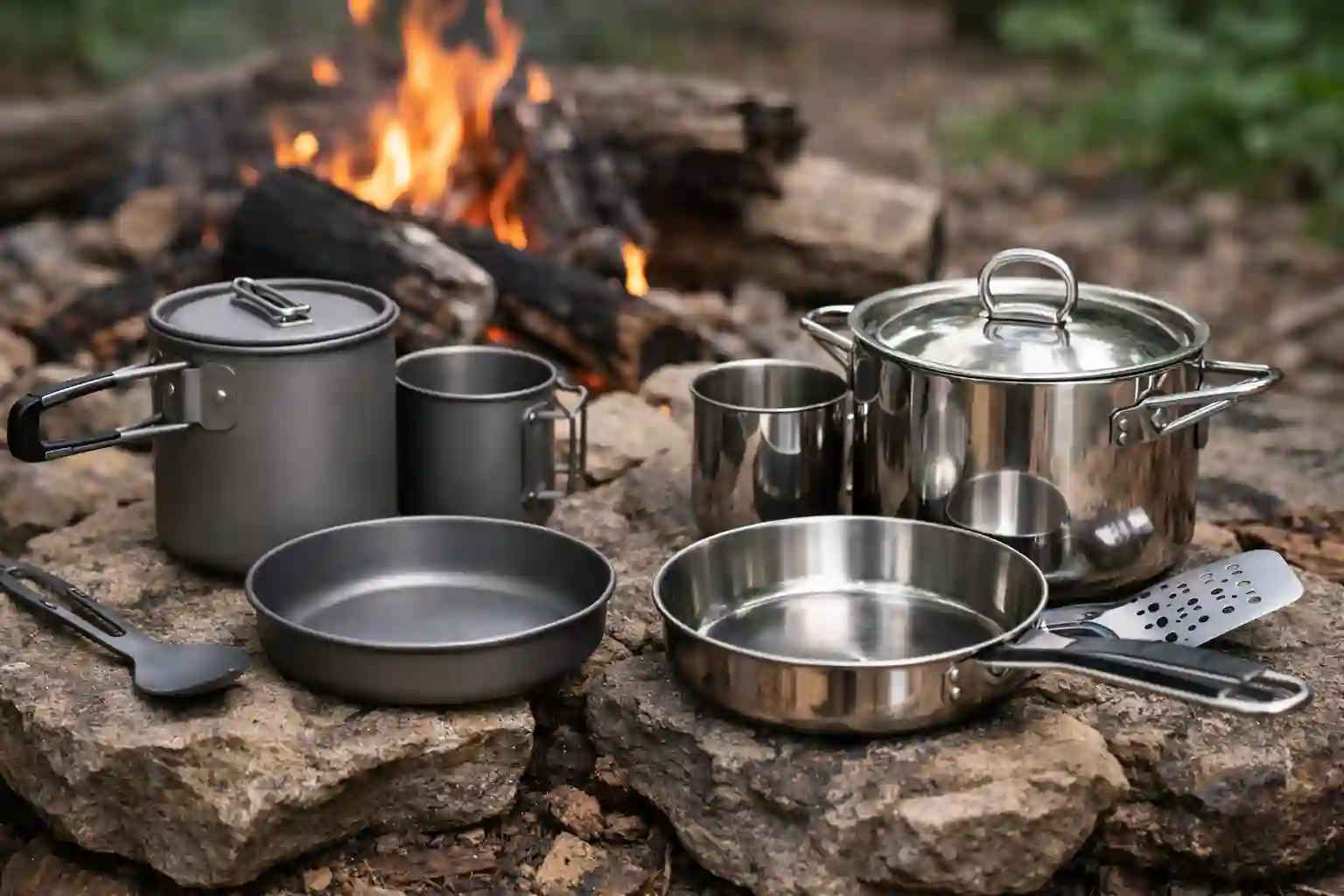
Two of the most common materials used for camping cookware are titanium and stainless steel. Both are known for their durability and resistance to rust, but they perform quite differently when used over a camp stove or open flame. Titanium cookware is often praised for its ultra-light weight, while stainless steel cookware is valued for its strength and balanced heat distribution.
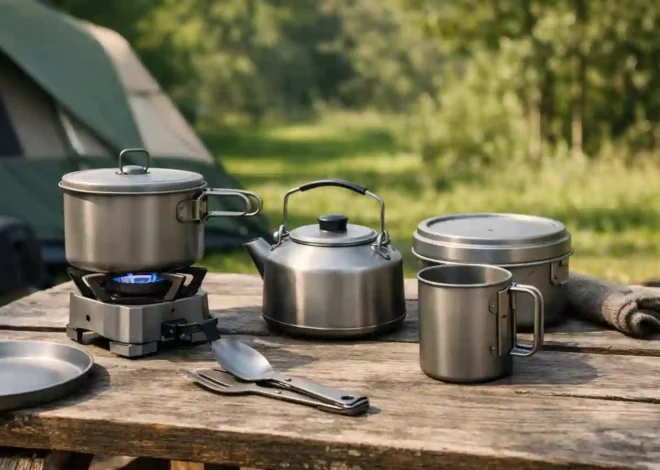
In this guide, we will take a detailed look at titanium vs stainless steel cookware and how each performs in real camping situations. If you’re building a complete outdoor cooking setup, you may also want to explore some of the best titanium camping cookware sets available for backpacking and camping.
Understanding Titanium Camping Cookware
Titanium cookware has become extremely popular among backpackers and ultralight campers in recent years. The main reason is simple: titanium offers exceptional strength while remaining remarkably light. For outdoor travelers who carry their gear for long distances, every ounce matters. Choosing cookware made from titanium helps reduce overall pack weight without sacrificing durability, making it especially appealing for long hiking trips and minimalist camping setups.
One of the most noticeable advantages of titanium cookware is how lightweight it is compared to other materials commonly used in camping gear. A titanium pot or pan can weigh significantly less than cookware made from stainless steel or aluminum. This weight reduction may seem small at first, but when combined with other ultralight gear, it can make hiking more comfortable and less physically demanding. Many ultralight hikers prefer titanium camping pots because they provide a strong and dependable cooking solution without adding unnecessary bulk to a backpack.
Another major benefit of titanium cookware is its outstanding corrosion resistance. Titanium does not rust and remains stable even when exposed to rain, humidity, saltwater air, or acidic foods. Campers who travel in coastal regions or damp environments often appreciate this property because it ensures the cookware will maintain its appearance and functionality over time. Even after years of use, titanium cookware typically shows very little degradation.
Titanium also has an impressive strength-to-weight ratio. Although it feels extremely light in the hand, the material itself is very strong and resistant to bending or structural damage. This combination of strength and lightness allows manufacturers to produce thin-walled cookware that still performs reliably in demanding outdoor conditions. With normal care, a titanium pot or mug can last for many years of camping and backpacking trips.
Despite its many advantages, titanium cookware does have a few limitations when it comes to cooking performance. Titanium does not conduct heat as evenly as some other metals. When placed over a camp stove or open flame, heat tends to concentrate in specific areas rather than spreading evenly across the entire cooking surface. As a result, hot spots can develop on the bottom of the pot or pan, which may cause food to burn if it is not stirred frequently.
For this reason, titanium cookware is generally best suited for simple cooking tasks such as boiling water, making coffee or tea, heating dehydrated meals, or preparing basic soups and noodles. Campers who enjoy cooking elaborate dishes outdoors may prefer cookware that distributes heat more evenly. However, for lightweight backpacking and quick meal preparation, titanium cookware remains one of the most practical and popular choices available.
Understanding Stainless Steel Camping Cookware
Stainless steel has been used in cookware for decades and remains a widely trusted material in both home kitchens and outdoor cooking equipment. Many campers choose stainless steel because it provides reliable performance, durability, and consistent cooking results. While it may not be the lightest option available, stainless steel cookware is known for its practicality and versatility when preparing meals in outdoor environments.
Unlike titanium, stainless steel cookware is usually heavier. However, that additional weight often brings improved cooking performance. Stainless steel tends to distribute heat more evenly across the cooking surface, which helps reduce the formation of hot spots. More even heat distribution makes it easier to cook a wider variety of foods without worrying about certain areas of the pot becoming excessively hot.
Because of this balanced heat performance, stainless steel cookware is often more versatile for outdoor cooking. It works well for frying eggs, sautéing vegetables, simmering sauces, or preparing more complex campsite meals. Campers who enjoy cooking fresh food rather than simply boiling water for dehydrated meals often prefer stainless steel for this reason.
Another major advantage of stainless steel is its durability. High-quality stainless steel cookware is highly resistant to scratches, dents, and structural deformation. Even after years of exposure to campfire heat or repeated use on portable stoves, stainless steel pots and pans usually remain stable and reliable.
Cleaning stainless steel cookware is also relatively straightforward. While food can occasionally stick to the surface, the material itself tolerates firm scrubbing and abrasive cleaning tools much better than many other metals. This makes stainless steel cookware easy to maintain during long camping trips when perfect cleaning conditions may not always be available.
The main drawback of stainless steel cookware is its weight. Compared to titanium alternatives, stainless steel pots and pans are typically bulkier and heavier. For car camping or base camps, this may not be a problem, but for backpacking trips where every gram matters, the extra weight can become noticeable.
Weight Comparison for Backpacking
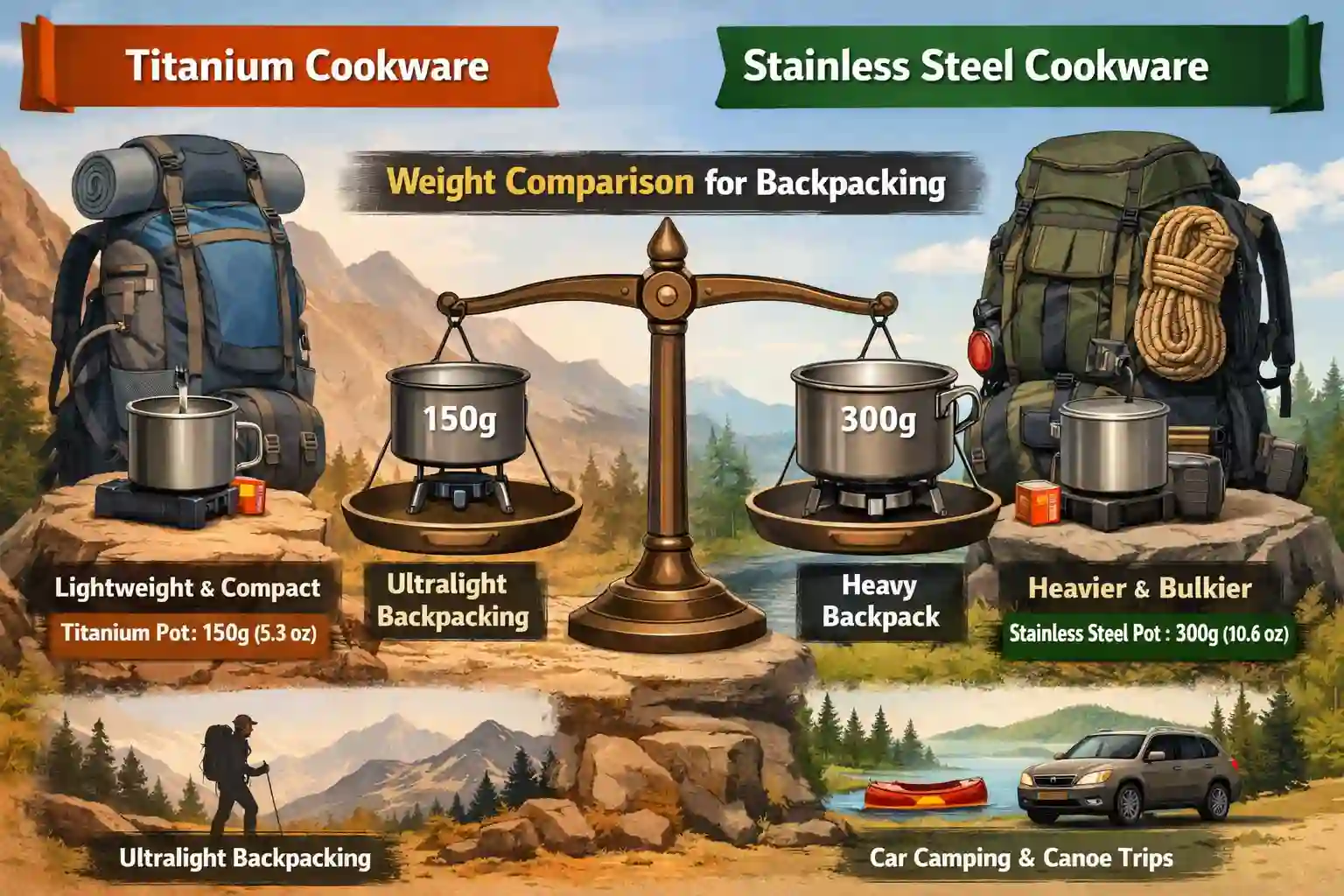
Weight is one of the most important considerations when choosing camping cookware, especially for hikers and backpackers.
Titanium cookware is widely known for its lightweight properties. Many ultralight campers also combine cookware with compact titanium camping stoves to create an efficient backpacking cooking system. A titanium pot can weigh as little as half the weight of a comparable stainless steel pot. For ultralight backpackers who carefully calculate every ounce of gear, this weight savings can significantly reduce overall pack load.
Because titanium is so light, many backpackers choose titanium cookware for long-distance trails or multi-day hikes. The lighter pack helps reduce fatigue and allows hikers to travel further with less strain.
Stainless steel cookware, while heavier, may still be suitable for certain camping styles. For example, campers traveling by car, camper van, or canoe often prioritize cooking performance over minimal weight. In these situations, the extra weight of stainless steel cookware becomes less of a concern.
Ultimately, if minimizing pack weight is a top priority, titanium cookware usually has the advantage.
Durability and Longevity
Both titanium and stainless steel are widely regarded as highly durable materials, which is one reason they are commonly used in camping cookware. Outdoor equipment must endure repeated heating, rough packing, and exposure to moisture or dirt, so durability plays an important role when choosing cooking gear. Although both metals perform well in demanding environments, they behave slightly differently when subjected to long-term use and physical stress.
Titanium is exceptionally strong relative to its weight and is known for maintaining structural stability even under high temperatures. Unlike some lightweight metals, titanium does not warp easily when exposed to direct flame or intense heat from camping stoves. It is also completely resistant to rust and corrosion, which means the material remains reliable even in damp climates or coastal environments. With proper care, titanium cookware can last for many years while maintaining its original strength and performance.
However, titanium cookware is often manufactured with very thin walls in order to minimize weight. While this design is ideal for backpackers who want the lightest possible gear, it also means the cookware may be more vulnerable to dents if it experiences strong impacts. For example, if a pot is tightly packed with other metal equipment inside a backpack or dropped onto hard ground, the thin titanium walls may bend slightly.
Stainless steel cookware, by contrast, is usually thicker and heavier. This extra thickness gives the material excellent resistance to dents, scratches, and deformation. Stainless steel pots and pans can tolerate rough handling during travel and are less likely to change shape if accidentally dropped or stacked with other gear. Because of this toughness, stainless steel cookware is often preferred for camping situations where equipment may be exposed to more rugged conditions.
For campers who expect their gear to experience heavy use, stainless steel may offer slightly greater resistance to physical damage. Titanium, however, still provides excellent durability while keeping weight extremely low. Both materials are capable of lasting for many seasons of camping, making them reliable long-term choices for outdoor cooking equipment.
Heat Distribution and Cooking Performance
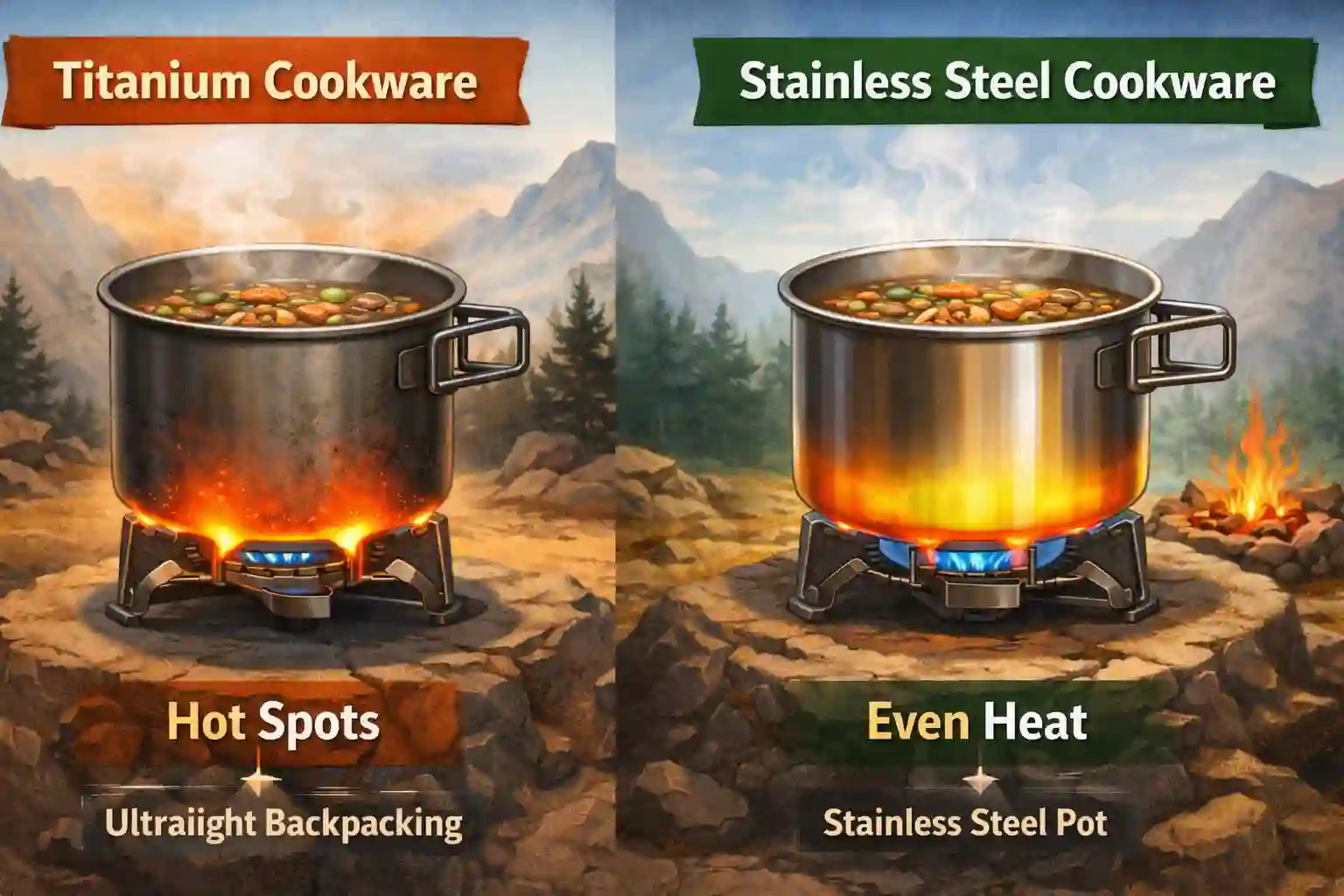
Cooking performance is where some of the most noticeable differences between titanium and stainless steel cookware begin to appear. While both materials are durable and reliable for outdoor use, they behave quite differently when exposed to heat from camping stoves or open flames. Understanding how each material handles heat can help campers choose cookware that matches their cooking style and the types of meals they plan to prepare outdoors.
Titanium does not conduct heat as evenly as stainless steel. When a titanium pot or pan is placed over a stove or fire, heat often concentrates in a small area rather than spreading evenly across the entire surface. This can create hot spots on the bottom of the cookware. If food is cooked directly over these hot spots without frequent stirring, it may burn more easily.
Because of this characteristic, titanium cookware is most commonly used for simple cooking tasks. It works extremely well for boiling water, preparing dehydrated backpacking meals, making tea or coffee, or heating soups and instant foods. Many backpackers rely on titanium cookware specifically for these quick cooking tasks because it is lightweight and efficient for heating liquids.
Stainless steel cookware, on the other hand, tends to distribute heat more evenly across the cooking surface. This more balanced heat distribution provides better temperature control and allows food to cook more consistently. When using stainless steel cookware, campers can more easily fry eggs, sauté vegetables, or simmer sauces without worrying as much about localized burning.
For campers who enjoy preparing fresh meals outdoors rather than simply heating water, stainless steel cookware often provides a more comfortable cooking experience. The improved heat distribution makes it easier to manage cooking temperatures and achieve more predictable results.
If cooking performance and versatility are your top priorities when camping, stainless steel cookware generally offers a slight advantage. However, for simple backpacking meals where weight savings are more important than precise cooking control, titanium cookware remains a very practical choice.
Ease of Cleaning
Cleaning cookware while camping can be challenging, especially when water supplies are limited.
Titanium cookware often has a smooth surface that resists staining and corrosion. When used mainly for boiling water or simple foods, it can be rinsed clean quickly with minimal scrubbing.
However, if food burns onto the bottom due to hot spots, cleaning titanium cookware may require more effort.
Stainless steel cookware can also be cleaned effectively in outdoor conditions. While food sometimes sticks more easily to stainless steel surfaces, the material itself is durable enough to handle vigorous scrubbing with sand, brushes, or scouring pads.
For campers who cook complex meals, stainless steel’s ability to withstand aggressive cleaning methods can be an advantage.
Cost and Availability
[affiai asin=”B092QS8TBL,B07G9WL347″ count=”2″ template=”grid”]
Price is another factor many campers consider when choosing cookware, especially when comparing titanium and stainless steel options. While both materials offer durability and long service life, their price points can differ noticeably depending on the design, brand, and manufacturing process.
Titanium cookware is typically more expensive than stainless steel alternatives. Titanium itself is a more costly material to produce and requires specialized manufacturing techniques to shape and finish properly. Because of these factors, titanium camping cookware often sits in the higher price range within the outdoor gear market. Lightweight titanium pots, mugs, and cookware sets are especially popular among ultralight backpackers who prioritize weight savings, even if it means paying a higher upfront cost.
Stainless steel cookware, on the other hand, is generally more affordable and widely available. Stainless steel has been used in cookware production for many decades, which makes manufacturing more efficient and keeps costs lower. As a result, many camping cookware sets designed for casual campers or beginners are made from stainless steel because it offers a practical balance of durability, cooking performance, and affordability.
For campers on a tighter budget, stainless steel cookware may provide better immediate value. However, some outdoor enthusiasts are willing to invest more in titanium cookware because the reduced weight can make a noticeable difference on long backpacking trips. Ultimately, the best choice often depends on whether a camper prioritizes lower cost or lighter gear for extended outdoor travel.
Best Use Cases for Each Material
Choosing between titanium and stainless steel cookware often depends on the type of camping you plan to do.
Titanium cookware is ideal for:
-
Ultralight backpacking trips
-
Long-distance hiking
-
Minimalist camping setups
-
Boiling water and simple meals
-
Travelers who prioritize lightweight gear
Stainless steel cookware is better suited for:
-
Car camping and base camps
-
Outdoor cooking with more complex meals
-
Campers who value cooking performance
-
Situations where cookware may face rough handling
-
Budget-friendly camping setups
Understanding your camping style helps determine which material will serve you best.
Environmental and Long-Term Considerations
Both titanium and stainless steel are known for their environmental durability, which is one reason they are commonly used in high-quality cookware and outdoor gear. Unlike some lightweight materials that wear out quickly or degrade under repeated heat exposure, these metals maintain their structural integrity for many years. When properly cared for, titanium and stainless steel cookware can survive countless camping trips without significant loss of performance. This long lifespan means campers do not need to replace their gear frequently, which helps reduce overall material consumption.
Titanium cookware is especially valued for its exceptional resistance to corrosion and chemical reactions. The metal does not rust and remains stable even after exposure to moisture, acidic foods, or salty environments. Because of this stability, a well-made titanium pot or pan can remain functional for decades. Many outdoor enthusiasts continue using the same titanium cookware for years without noticeable deterioration. Fewer replacements over time mean less manufacturing demand and ultimately less waste entering the environment.
Stainless steel cookware also performs well from a sustainability perspective. High-quality stainless steel is extremely durable and can withstand heavy use without cracking or breaking. In addition, stainless steel is widely recyclable and commonly reused in industrial manufacturing. At the end of its life cycle, stainless steel cookware can often be recycled and repurposed into new metal products, reducing the need for additional raw material extraction.
For campers who care about minimizing environmental impact, choosing long-lasting cookware is often more important than focusing only on the material itself. A well-designed titanium or stainless steel pot that lasts for many seasons of camping reduces waste, packaging, and repeated production cycles. Investing in durable cookware that can be used for years is one of the simplest ways outdoor enthusiasts can make more sustainable gear choices while still enjoying reliable performance on the trail.
Frequently Asked Questions
Is titanium cookware better than stainless steel for camping?
Titanium cookware is usually better for ultralight backpacking because it weighs much less. Stainless steel cookware, however, often provides better heat distribution and cooking control. The better option depends on whether weight savings or cooking performance matters more for your trip.
Does titanium cookware burn food easily?
Titanium cookware can develop hot spots because the metal does not distribute heat as evenly as stainless steel. As a result, food may burn more easily if it is cooked directly over high heat without stirring.
Is stainless steel cookware too heavy for backpacking?
Stainless steel cookware is heavier than titanium, which can make it less ideal for long-distance backpacking. However, for short hikes, car camping, or base camps, the extra weight may not be a significant issue.
Is titanium cookware safe for cooking?
Yes. Titanium is widely considered safe for cooking because it is non-reactive, corrosion-resistant, and does not leach harmful substances into food. If you’d like a deeper explanation, you can read our full guide on whether titanium cookware is safe for cooking.
Which cookware lasts longer for camping?
Both titanium and stainless steel cookware are extremely durable. Titanium resists corrosion and maintains its strength for many years, while stainless steel is highly resistant to dents and scratches.
Conclusion
When comparing titanium vs stainless steel cookware for camping, neither material is universally better. The right choice depends on how and where you plan to use it.
Titanium cookware excels in situations where weight matters most. Backpackers and ultralight hikers often prefer titanium because it significantly reduces pack weight while remaining strong and corrosion-resistant.
Stainless steel cookware, however, offers better heat distribution and more versatile cooking performance. Campers who enjoy preparing full meals outdoors may find stainless steel easier to cook with.
For simple cooking tasks like boiling water or heating dehydrated meals, titanium cookware is often the most practical choice. For more involved cooking, stainless steel cookware usually performs better.
Understanding these differences allows you to choose cookware that matches your camping style, making outdoor cooking more enjoyable and efficient on every trip.

Related Posts
Best Titanium Camping Gear in 2026: Complete Buying Guide
7 Best Titanium Camping Food Containers in 2026