Where Does Titanium Come From? The Complete Guide to Its Ore, Mining & Production
Ever picked up a titanium camping pot, a lightweight bike frame, or a shiny titanium ring and wondered where that metal actually comes from? The journey from ore in the ground to the finished part in your hand involves mining, chemical processing, and careful metalworking. For people who buy or use titanium products, understanding that journey helps explain why titanium costs more than similar metals, why it performs so well, and what to expect when you repair or recycle it.
Quick answer: where does titanium come from
Titanium comes from mineral ores found in the Earth, most commonly ilmenite and rutile. Those ores are mined in places such as Australia, South Africa, Canada, India, Norway, and China. The ore is processed chemically to make titanium sponge or powder, which is then melted or consolidated into usable metal. From there, titanium is formed into ingots, sheets, billets, or powders and manufactured into products ranging from aerospace parts to camping cookware.
For consumers choosing cookware, the Best Titanium Camping Gear guide lists durable, lightweight options and price considerations.
How titanium starts in the ground
Titanium is not dug out as “pure titanium metal.” Instead, it is found in minerals mixed with other elements. The two most important minerals are:
- Ilmenite. A titanium-iron oxide that is the most abundant source of titanium worldwide. Ilmenite looks dark and heavy, and it often occurs in sand deposits near beaches and in hard rock deposits.
- Rutile. A more titanium-rich mineral, rutile contains a higher percentage of titanium dioxide and is usually easier to process in some refining methods. Rutile is less common than ilmenite.
Those minerals form through geological processes over millions of years. Ilmenite is commonly found in heavy mineral sand deposits, which form when wave and wind action concentrates heavy mineral grains along coastlines and river mouths. Rutile can form in similar sediments or as a metamorphic mineral in some rock types.
Where the ores are mined
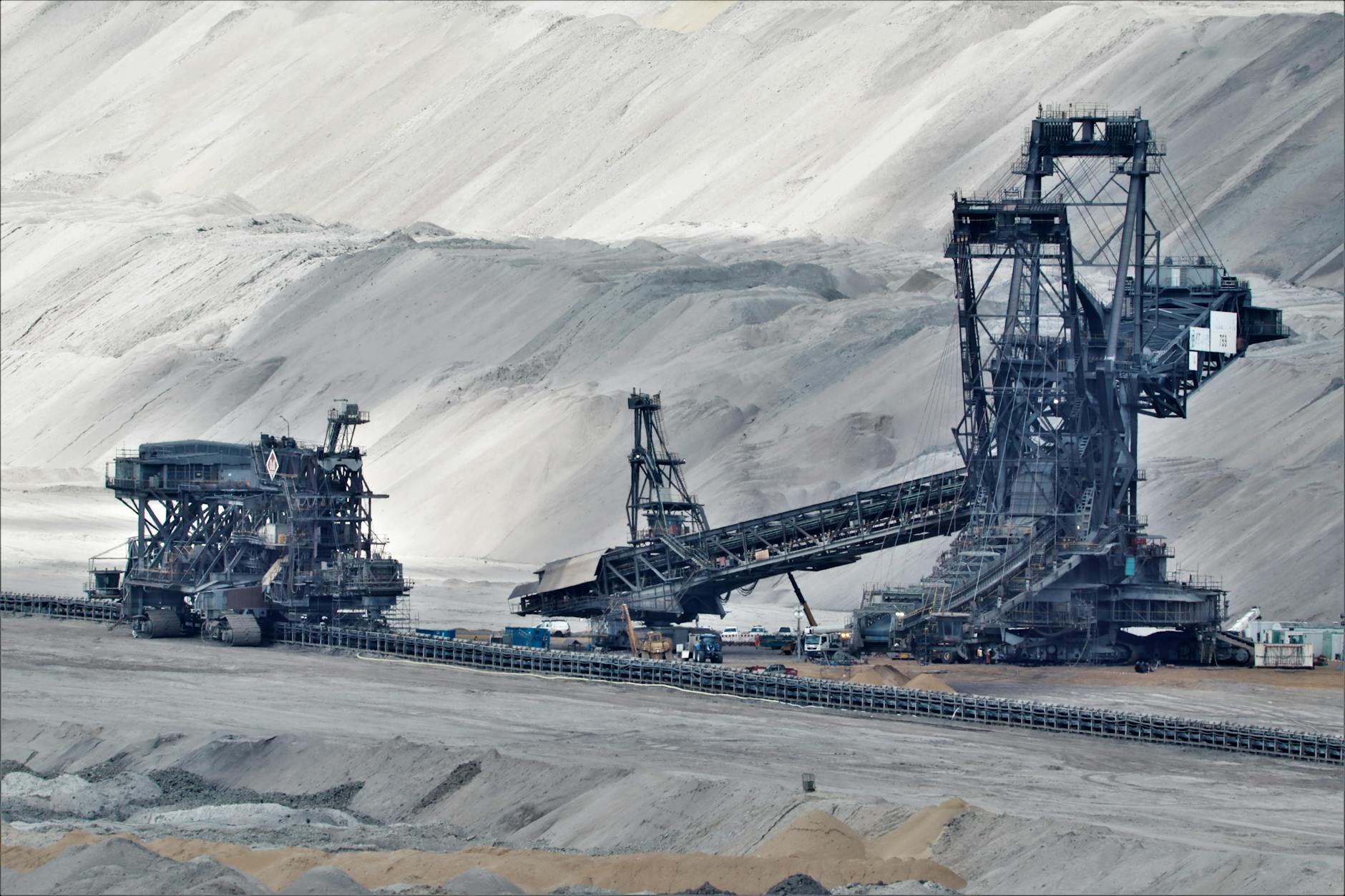
Titanium-bearing minerals occur in many countries, but a handful of regions produce most of the world’s supply of ilmenite and rutile. Mining operations vary from large scale open-pit mines to sand mining along coasts and river valleys.
Major producing countries
Some of the countries commonly associated with significant titanium ore production include:
- Australia, known for large heavy-mineral sand deposits.
- South Africa, with both beach sands and inland deposits.
- Canada, where hard-rock and sand deposits supply ilmenite.
- India, which mines both rutile and ilmenite in coastal deposits.
- Norway and Ukraine, with mineral deposits in rock formations and sediments.
- China, which produces both ore and refined titanium products.
- United States, which has some ilmenite reserves and a titanium manufacturing industry.
Which countries lead production can change over time because of market demand, new deposits, regulations, and investment. For consumers, that means the origin of titanium in a product can be diverse and sometimes mixed in supply chains.
How ore becomes titanium metal: the main processing steps
Titanium processing converts ore into metal in several stages. The chemistry is more complex than for metals like iron or aluminum, because titanium binds strongly with oxygen and nitrogen. The common industrial route to metal involves two major steps: producing titanium tetrachloride, and reducing that to metal powder or sponge.
From ore to titanium tetrachloride (TiCl4)
The most common approach starts by separating titanium-rich minerals from sand or rock and removing impurities. The processed concentrate is then converted to titanium tetrachloride, TiCl4, using a chlorination reaction. TiCl4 is a liquid at room temperature and serves as an intermediate that can be purified by distillation. Purity matters because impurities carry through into the final metal and influence properties.
From TiCl4 to titanium sponge: the Kroll process
The traditional industrial method for producing metallic titanium is the Kroll process. In that process, TiCl4 is reacted with a reactive metal such as magnesium in an inert atmosphere. The reaction reduces the titanium compound to a porous metal product called titanium sponge. The sponge looks like a brittle, porous mass of metal particles. After the reduction step, the sponge is cleaned to remove residual salts and impurities.
Alternative routes and powders
There are other processes used in modern manufacturing. The Hunter process is an older method that uses sodium to reduce TiCl4. Newer technologies can produce titanium powders directly, using methods such as the chloride process followed by powder production, or by making fine powders through hydride-dehydride (HDH) processing. Powder is important for additive manufacturing, metal injection molding, and powder metallurgy.
From sponge or powder to finished metal parts
Titanium sponge and powders are starting points. To get solid metal that can be shaped, manufacturers use melting or consolidating techniques.
Melting and ingot production
Titanium sponge is usually melted in vacuum furnaces to remove gases and produce ingots. Typical methods include vacuum arc remelting (VAR) and electron beam cold hearth melting. Those melting steps produce large metal ingots that are then forged, rolled, or processed into sheets, rods, wire, and bar stock.
Powder consolidation and additive manufacturing
Powder metallurgy techniques compact titanium powder into solid shapes. Sintering and hot isostatic pressing (HIP) are common. In recent years, additive manufacturing, also called 3D printing, has become important for titanium. Selective laser melting and electron beam melting can build complex titanium parts directly from powder. Those methods are widely used in aerospace, medical implants, and prototype work.
Forming and machining
Once ingots or billets exist, manufacturers roll and forge titanium into sheets, tubes, or bars. Titanium is strong and has low thermal conductivity compared to steel, so machining requires different tooling, speeds, and coolants. Welding titanium demands an inert atmosphere because it reacts with oxygen and nitrogen when hot. That sensitivity explains why titanium parts usually cost more to produce than equivalent steel parts.
Titanium grades and what they mean for products
Titanium is available in a few common grades. Each grade has a shorthand designation and a handful of typical properties. The most widely used grades are commercially pure titanium grades and several alloy grades with added elements such as aluminum and vanadium.
| Grade | Type | Typical use | Key traits |
|---|---|---|---|
| CP-Ti (Grade 1–4) | Commercially pure | Corrosion-resistant parts, chemical processing, cookware | Excellent corrosion resistance, good formability, lower strength than alloys |
| Ti-6Al-4V (Grade 5) | Alpha-beta alloy | Aerospace, medical implants, high-strength components | High strength-to-weight ratio, good fatigue performance, weldable |
| Ti-6Al-4V ELI | Low interstitial | Medical implants, critical aerospace | Improved toughness, lower impurities |
| Other alloys (e.g., Ti-3Al-2.5V) | Alloy | Automotive, sporting goods, specialized components | Balanced strength and formability |
Why this matters to you. If you are buying titanium cookware, you are probably looking at CP-Ti for its corrosion resistance and light weight. If you are considering a titanium bike frame or aerospace component, Ti-6Al-4V is more likely because it offers higher strength.
Properties of titanium that come from its origin and processing
Titanium’s qualities are not magical. They come from its atomic structure, how it reacts with oxygen, and how it is processed into metal. Here are the practical properties and why they matter in everyday products.
- Strength-to-weight ratio. Titanium is strong while being lighter than steel. That makes products like bike frames, tent stakes, and cookware lighter without sacrificing strength.
- Corrosion resistance. Titanium naturally forms a thin oxide layer that protects it from rust and many chemicals. That makes it excellent for water bottles, cookware, and marine parts.
- Biocompatibility. Titanium is well-tolerated in the human body, which is why it is used for implants. Its origin in clean, well-processed metal helps avoid reactions.
- Temperature performance. Titanium retains strength at higher temperatures than aluminum, which is useful for aerospace and engine components.
- Workability. Commercially pure titanium is relatively easy to form, but alloys can be trickier and require special processing.
Environmental and economic factors in titanium production
Mining and refining titanium involve energy, chemicals, and transportation. These factors affect product cost and environmental footprint.
Energy and chemical use
Converting ore to TiCl4 and then to metal uses heat and chemicals. The Kroll process requires high temperatures and reactive metals such as magnesium. Distillation steps remove impurities. All of this consumes energy and creates waste streams that operators must manage responsibly.
Land disturbance and sand mining
Heavy-mineral sand mining, found in beach and river systems, can disturb ecosystems. Modern operations are regulated in many countries and include rehabilitation plans, but environmental impact varies by site and operator practices.
Recycling and circularity
Titanium is recyclable. Scrap from manufacturing and end-of-life recovery can be melted and reused. Recycling saves energy compared to producing metal from ore, and it reduces demand for raw mining. However, collection and sorting are necessary to preserve material quality. Some specialized titanium parts, such as medical implants, have strict controls that limit recycling options, while industrial scrap is widely reused.
Supply chain and traceability
By the time titanium reaches a consumer product, ore from different countries can be blended. That blending makes direct traceability difficult unless manufacturers specifically track origin. Some buyers and industries require documented provenance because of environmental or ethical concerns. Certifications and supply chain audits help provide confidence, but they can add cost.
How to check origin for a product
- Look for manufacturers’ documentation or material certificates that list the mill and country of processing.
- Ask about recycled content if environmental footprint is a priority.
- For critical applications, suppliers often provide traceability records that follow the material through production.
How the source and processing affect price and availability
Titanium is generally more expensive than common steels or aluminum. Several reasons explain why.
- Complex processing. Ore-to-metal steps are more involved than for iron or aluminum, which adds cost.
- Energy and materials. High-temperature reduction and vacuum melting require expensive equipment and energy.
- Specialized manufacturing. Welding, machining, and finishing titanium are more difficult and slower than for softer metals.
- Market size. Demand from aerospace and medical sectors means higher performance grades are produced in smaller volumes than mass-market steels.
Availability matters, too. Mining disruptions, changes in demand from aerospace or defense, and trade policies can influence raw material availability and prices for finished products.
Real-world examples: how origin shows up in products
Seeing where titanium comes from in actual products can be subtle. Here are examples that connect origin to the finished item.
Camping cookware
Most titanium cookware is made from commercially pure grades. Manufacturers source titanium sheet or foil from mills that refine sponge into ingots and roll it into thin material. The product’s weight, color, and corrosion resistance depend on grade and finishing rather than ore origin. Recycled titanium is common for consumer cookware, helping reduce cost and environmental impact.
Watches and jewelry
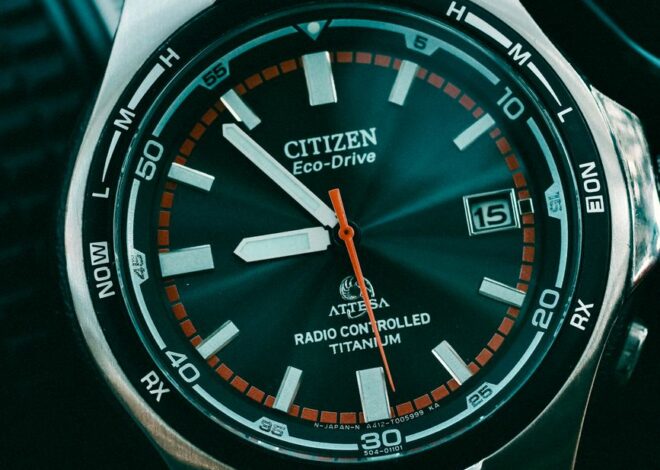
Watch and jewelry makers choose titanium for color, hypoallergenic properties, and scratch resistance when surface-treated. High-end watch cases might come from specific alloy compositions like Ti-6Al-4V for strength, but many jewelry items use CP-Ti. Traceability is sometimes advertised for premium pieces, but not always.
Aerospace parts
Aircraft and engine components use high-performance alloys such as Ti-6Al-4V. Manufacturers source metals from qualified mills with strict documentation. Origin and processing quality are critical because material performance affects safety. The supply chain for aerospace-grade titanium is controlled and audited.
Common misconceptions about “where titanium comes from”
Several misunderstandings come up regularly. Correcting them helps set expectations for buyers and users.
- Misconception: Titanium is mined as a pure metal. Reality: It is mined as oxide minerals such as ilmenite and rutile that must be chemically converted.
- Misconception: All titanium is identical. Reality: Grades and alloys vary widely. Commercially pure titanium behaves differently from Ti-6Al-4V.
- Misconception: Titanium is always mined sustainably. Reality: Mining impacts vary by site and operator. Recycled titanium reduces environmental impact.
- Misconception: Titanium parts are always superlight. Reality: Titanium is lighter than steel for the same strength, but design and wall thickness matter. A heavy titanium mug can still weigh more than a thin stainless steel one.
Table: Pros and cons of titanium based on its origin and processing
| Pros | Cons |
|---|---|
| Excellent corrosion resistance, good strength-to-weight ratio, biocompatible, durable | Higher cost, energy-intensive production, special manufacturing needs |
| Recyclable, many product-grade options, good for high-performance applications | Traceability can be complex, surface scratching visible on some finishes |
Practical implications for buyers and users
Knowing where titanium comes from helps in three practical ways: choosing the right product, understanding cost, and maintaining the item.
Choosing the right titanium product
- Pick commercially pure grades for corrosion resistance in everyday items such as cookware and water bottles.
- Choose alloyed grades for high strength where load-bearing performance matters, for example bike frames or aerospace components.
- Ask suppliers for material certificates if you need documented grade or origin for safety or warranty reasons.
Understanding cost and value
Expect to pay a premium for titanium compared with common steels or aluminum. The price premium reflects raw material processing, machining difficulty, and the specialized manufacturing chain. For many users, the long-term value comes from lighter weight, corrosion resistance, and longevity rather than a lower upfront cost.
Maintenance and repair considerations
Titanium requires less corrosion maintenance than steel, but it is not immune to surface wear. Scratches can change how an item looks, and welding or repairs must be done by experienced technicians. For household items, simple cleaning and avoiding harsh chemicals usually keep titanium in good shape.
Recycling titanium and reducing environmental impact
Using recycled titanium lowers the need for new mining and reduces energy use. There are two common recycling sources:
- Manufacturing scrap, which includes offcuts and rejected parts. This material is relatively clean and easier to return to the melt.
- End-of-life scrap, which requires sorting and sometimes cleaning before reuse. High-value sectors such as aerospace often reclaim scrap carefully.
For consumers, buying products with recycled content can be a practical way to reduce environmental impact. Some manufacturers label recycled content, but labeling is not universal.
How sourcing trends might affect consumers
Global demand in aerospace, medical, and renewable energy sectors influences titanium markets. If demand increases, materials and finished parts can become more expensive. Conversely, advances in processing or recycling could lower cost over time. For consumers, that means product availability and price may shift based on broader market trends, not just on a local store’s inventory.
Common questions about origin, safety, and use
The following FAQ section answers specific questions people often ask about where titanium comes from and how that origin affects use.
FAQ
- Q: Is titanium mined ethically?A: Ethical practices vary by mine and region. Some operations follow strong environmental and labor standards, while others may not. Look for supplier transparency, certifications, or recycled content if ethical sourcing is a priority.
- Q: Can I tell where a titanium product came from by looking at it?A: Not usually. Visual inspection does not reveal ore origin. Material certificates or supplier documentation are needed to trace the source.
- Q: Is recycled titanium as good as newly produced titanium?A: Recycled titanium can meet the same specifications if it is properly sorted, processed, and melted. For critical applications such as medical implants, strict controls apply and recycled content may not be used unless specified.
- Q: Does the country of origin affect product performance?A: Performance depends more on grade, processing, and manufacturing quality than on the ore’s geographic origin. Certified mills and processors follow standards regardless of country.
- Q: Why is titanium used in implants and not other metals?A: Titanium is biocompatible, resists corrosion from body fluids, and integrates well with bone in many applications. That combination of properties comes from the metal’s chemistry and how it is processed into pure or low-impurity forms.
- Q: Are there environmental downsides to using titanium?A: Mining and refining consume energy and create waste, so there is an environmental cost. Recycling, efficient manufacturing, and responsible mining practices reduce that impact.
- Q: Can titanium be found in my area?A: Titanium mineral deposits are not evenly distributed. Unless your area has known ilmenite or rutile deposits, you are unlikely to find mineable concentrations. Local geology maps or university geology departments can offer information.
Practical takeaways for buying or using titanium products
- Know the grade you need. Commercially pure titanium is ideal for corrosion resistance and lightweight consumer goods. Alloyed grades are needed when strength is critical.
- Traceability matters for critical uses. If you need documented origin or grade because of safety or warranty, ask the supplier for certificates.
- Expect higher cost but longer life. Titanium is usually pricier upfront. In many applications the long service life or weight savings justifies the cost.
- Look for recycled content if environmental impact is a concern. Recycled titanium uses less energy than making new metal from ore.
- Maintenance is simple. Titanium resists corrosion so basic cleaning is often enough. Repairing or welding titanium requires specialists.
Where to learn more about specific titanium products
Want to dive deeper?
- For cookware and camping gear, look for manufacturer technical pages that list material grades and thickness.
- For aerospace and medical parts, search for material certificates and supplier qualifications such as NADCAP or ISO approvals.
- For environmental and mining information, check mining company sustainability reports and independent environmental assessments.
Final practical insights
Titanium starts as minerals in the ground and becomes useful metal only after several energy-intensive and carefully controlled steps. The origin matters more for environmental and ethical concerns than for day-to-day performance of most consumer items. For most buyers, the right approach is to match titanium grade to the product’s needs, expect a premium price that reflects complex processing, and look for recycled content or supplier transparency when sourcing is important. Knowing these basics makes it easier to choose the right titanium product and to understand why it behaves the way it does in real life.