Why is Titanium So Expensive? A Complete Breakdown of Titanium Costs
Titanium has a reputation that few materials can match. It is strong without being heavy, highly resistant to corrosion, and capable of lasting for years with minimal wear. From aerospace components to outdoor gear and cookware, it is used where performance truly matters.
But there is one thing people notice immediately.
The price.
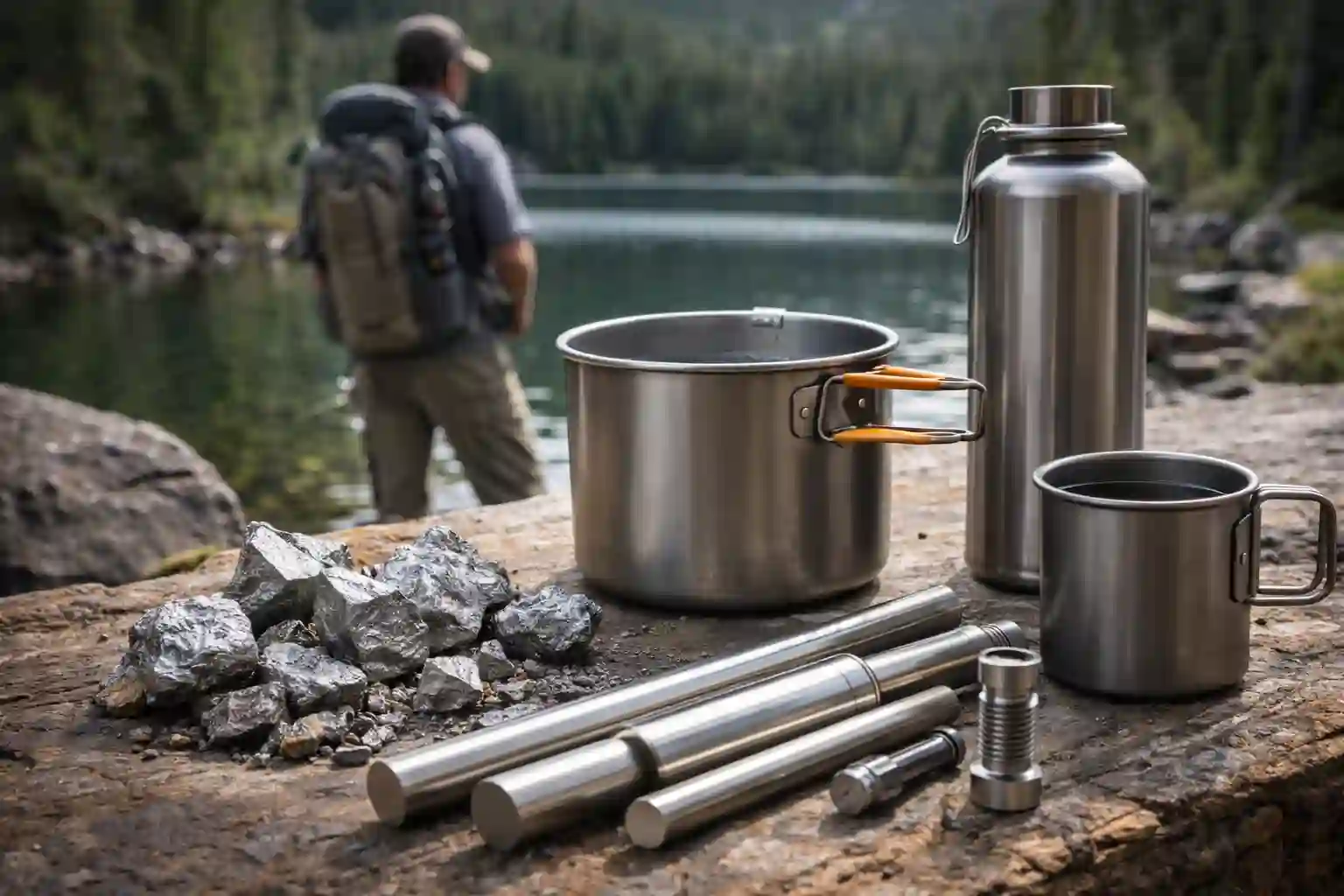
Whether you are looking at a titanium camping pot, a set of bike bolts, or a simple everyday tool, titanium products tend to cost significantly more than stainless steel or aluminum alternatives. At first glance, that difference can feel hard to justify, especially when the designs themselves often appear simple.
Titanium is expensive primarily because it is difficult to extract, refine, and manufacture. Each stage requires more energy, stricter control, and more specialized processes than most other metals.
Once you understand how titanium is produced and handled, the price starts to make much more sense. The higher cost is not driven by a single factor. It comes from a combination of challenges in production, processing, and supply, each adding its own layer of complexity.
Why Is Titanium So Expensive to Produce?
The biggest reason behind titanium’s price is not rarity. It comes down to how difficult it is to turn raw material into usable metal.
Titanium is actually quite abundant in the Earth’s crust. It is commonly found in minerals such as rutile and ilmenite, so supply at the raw level is not the issue. The challenge begins when you try to extract it in a form that can be used in real products.
Unlike metals such as iron or aluminum, titanium cannot be processed through simple smelting. When exposed to high temperatures, it reacts easily with oxygen, nitrogen, and even carbon. Once that happens, the material can become brittle and lose the properties that make titanium valuable in the first place.
Because of this, titanium has to be processed in tightly controlled environments. Most commercial titanium is produced using the Kroll process, which is a multi-step chemical method rather than a straightforward melting technique.
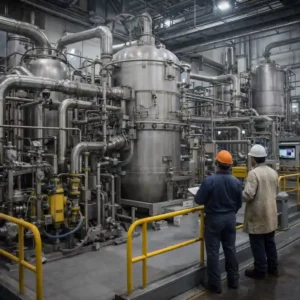
The process usually involves converting titanium ore into titanium tetrachloride, purifying that compound, and then reducing it with magnesium at high temperatures in an oxygen-free system. What comes out of this stage is not a finished metal, but a porous material known as titanium sponge. This sponge still needs to be melted, refined, and formed into usable shapes before it can be used in manufacturing.
Each step requires precision. It also requires time.
Even small amounts of contamination can weaken titanium or affect how it performs. That is why the entire process has to be carefully managed, from temperature control to atmospheric conditions. There is very little room for shortcuts.
Compared to steel or aluminum production, the difference is significant. Those materials can be produced in large volumes using relatively efficient processes. Titanium, on the other hand, remains slower to produce and more dependent on specialized equipment.
In practical terms, this leads to higher energy use, longer production cycles, and stricter quality control requirements. By the time titanium reaches the stage where it can be turned into a product, it has already accumulated a substantial cost.
And this is only the first layer of why titanium ends up being so expensive.
Titanium Extraction Is Complex and Energy-Intensive
Most titanium begins as naturally occurring minerals such as rutile and ilmenite. While these ores are relatively common, extracting pure titanium from them is anything but straightforward.
Unlike metals that can be melted and separated through traditional smelting, titanium requires a more controlled and indirect approach. The most widely used method today is the Kroll process, which involves a series of chemical transformations rather than a single extraction step.
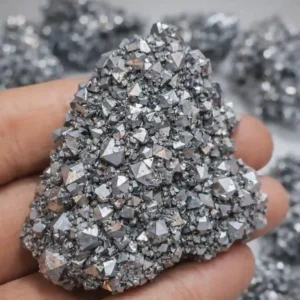
The process starts by converting titanium ore into titanium tetrachloride, a volatile compound that can be purified more easily than raw ore. This stage is essential because even small amounts of unwanted elements can affect the final material.
Once purified, the titanium tetrachloride is reduced using magnesium at high temperatures. This reaction takes place in a sealed environment to prevent exposure to oxygen. If oxygen enters the system, the titanium can become brittle and lose its structural integrity.
At this point, the material is not yet in a usable metallic form. Instead, it becomes a porous substance known as titanium sponge. This sponge still requires further processing, including melting and solidification, before it can be shaped into products.
What makes this entire process expensive is not just the number of steps, but the conditions required to carry them out. High temperatures must be maintained for extended periods, and the environment has to be carefully controlled throughout.
In practical terms, this means:
-
Large amounts of energy are consumed during processing
-
Production cycles take longer than most common metals
-
Specialized equipment is required at every stage
Unlike steel or aluminum, which benefit from highly optimized and scalable production systems, titanium remains slower and more resource-intensive to produce.
This combination of complexity, energy demand, and strict control is one of the main reasons titanium carries a higher price from the very beginning.
Getting titanium out of ore is only the first step. Turning it into a reliable material requires even tighter control over purity and composition.
Titanium Is Difficult to Refine and Maintain Purity
Titanium’s performance depends heavily on purity, and this is one of the most overlooked reasons behind its cost.
Unlike many common metals, titanium is extremely sensitive to contamination during processing. Even small amounts of oxygen, nitrogen, or carbon can alter its internal structure. When that happens, the material may become brittle or lose the strength and corrosion resistance that make it valuable in the first place.
Because of this, refining titanium is not just about shaping the metal. It is about protecting it at every stage.
After the initial extraction process produces titanium sponge, the material must be melted and refined under carefully controlled conditions. This is often done in a vacuum or an inert gas environment to prevent unwanted reactions. Maintaining these conditions requires specialized equipment and strict monitoring throughout the process.
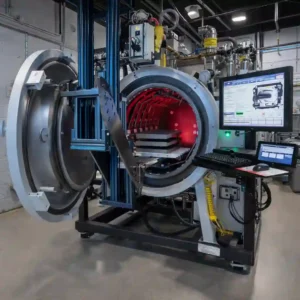
What makes this stage particularly demanding is that there is very little tolerance for error. In more forgiving metals like steel or aluminum, minor impurities can often be managed or corrected later. With titanium, contamination at the wrong stage can compromise the entire batch.
This has several practical implications:
-
Refining requires controlled environments such as vacuum furnaces or inert gas chambers
-
Production batches must be closely monitored for chemical stability
-
Rejected or contaminated material leads to higher waste and cost
These constraints make titanium production less flexible and more resource-intensive compared to other metals.
It also explains why titanium is more commonly found in high-performance applications, where material reliability is critical, and the higher cost can be justified.
Titanium Is Hard to Machine and Manufacture
Once titanium has been extracted and refined, the challenges do not end. In many ways, they become even more noticeable during manufacturing.
Working with titanium is fundamentally different from working with more common metals like aluminum or steel. One of the main reasons is its low thermal conductivity. When titanium is cut, drilled, or milled, heat does not dissipate efficiently. Instead, it builds up quickly at the point of contact between the tool and the material.
This localized heat creates several problems.
First, it accelerates tool wear. Cutting tools dull much faster when working with titanium, which means they need to be replaced more frequently. Second, the heat can affect the surface quality of the material, requiring slower cutting speeds and more controlled machining conditions to maintain precision.
As a result, manufacturers cannot rely on the same high-speed processes used for aluminum or mild steel. Instead, they often have to use:
-
slower machining speeds to control heat buildup
-
specialized cutting tools designed for high-temperature resistance
-
additional cooling or lubrication systems to protect both the tool and the material
Even with these measures, titanium remains time-consuming to machine. Each component takes longer to produce, especially when tight tolerances are required.
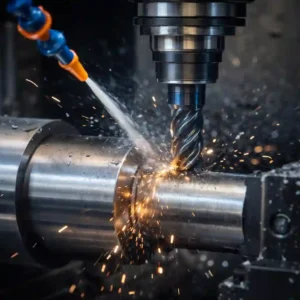
Another factor is titanium’s strength. While its strength-to-weight ratio is one of its biggest advantages, it also makes the material more resistant to cutting forces. This increases the mechanical load on equipment and further contributes to tool wear and production complexity.
In practical terms, this leads to:
-
Higher tooling costs due to frequent replacement
-
longer production times per part
-
increased labor and machine usage
All of these factors add to the final cost of titanium products, particularly in precision applications where consistency and reliability are essential.
Limited Supply and Production Scale
Titanium is abundant in nature, but that does not mean it is widely available in a usable form.
The difficulty lies in how it is processed. Because titanium requires complex extraction and refining methods, production cannot be easily scaled up in the same way as metals like steel or aluminum. These materials benefit from highly optimized, high-volume manufacturing systems that have been refined over decades.
Titanium production, by comparison, remains more specialized.
The facilities required to process titanium are more complex and less widespread. Each stage of production, from chemical extraction to controlled refining, limits how quickly and efficiently output can be increased. As a result, global production volumes are significantly lower.
This has a direct impact on cost.
When a material is produced at scale, manufacturers can spread costs across large volumes, reducing the price per unit. With titanium, that advantage is much more limited. Smaller production runs mean that fixed costs, energy consumption, and equipment investment are distributed over fewer units.
At the same time, demand for titanium tends to come from high-performance industries, where quality matters more than quantity. This includes sectors that prioritize strength, weight reduction, and corrosion resistance over low cost.
In practical terms, this creates a supply structure where:
-
Large-scale mass production is limited
-
Supply chains are more specialized and less flexible
-
Per-unit costs remain relatively high
Even though titanium is not rare, the combination of production constraints and specialized demand prevents it from benefiting from the same cost efficiencies as more common metals.
This imbalance between availability and scalability is another key reason titanium remains expensive.
Different Grades of Titanium Affect the Price
Not all titanium is the same, and this is one of the less obvious reasons why prices can vary so much between products that appear similar at first glance.
Titanium is available in several grades, each with different mechanical properties, levels of purity, and intended applications. These differences influence not only how the material performs, but also how difficult it is to produce and process.
Titanium Grade Comparison
|
Grade |
Type |
Key Features |
Typical Uses |
|---|---|---|---|
|
Grade 1 |
Pure Titanium |
Very soft, excellent corrosion resistance |
Chemical equipment, medical applications |
|
Grade 2 |
Pure Titanium |
Balanced strength and corrosion resistance |
Cookware, camping gear, outdoor products |
|
Grade 3 |
Pure Titanium |
Higher strength, moderate flexibility |
Industrial components |
|
Grade 4 |
Pure Titanium |
Strongest among pure grades |
Aerospace parts, medical devices |
|
Grade 5 (Ti-6Al-4V) |
Alloy Titanium |
Very high strength and heat resistance |
Aerospace, high-performance tools |
Most titanium cookware and outdoor gear typically use Grade 2 titanium, while higher-grade alloys like Ti-6Al-4V are reserved for more demanding applications.
Commercially pure titanium is typically classified as Grade 1 through Grade 4. These grades contain very small amounts of additional elements and are valued for their corrosion resistance and formability. They are often used in applications where chemical stability and durability are more important than maximum strength.
In contrast, alloyed titanium, such as Grade 5, also known as Ti-6Al-4V, contains aluminum and vanadium. This combination significantly increases strength and heat resistance, making it suitable for more demanding applications where structural performance is critical.
These differences come at a cost.
Higher-strength alloys require more precise control during production and are generally harder to machine. They may also involve additional processing steps and stricter quality standards, which would increase manufacturing complexity.
Even within commercially pure grades, higher grades can require tighter control over impurities, which adds to the cost of refining.
For consumers, this means that two products labeled as “titanium” may not be directly comparable. A lightweight camping mug made from a lower grade of titanium may prioritize corrosion resistance and weight savings, while a high-performance tool or component made from an alloy like Grade 5 is designed for strength and durability under stress.
In practical terms, material grade influences:
-
mechanical strength and durability
-
resistance to heat and environmental conditions
-
difficulty of machining and finishing
-
overall production cost
Understanding these differences helps explain why titanium products can vary widely in price, even when they look similar on the surface.
Why Titanium Products Cost More Than Other Metals
When compared to other metals, titanium sits in a unique position.
Stainless steel is durable and relatively affordable, but heavier. Aluminum is lightweight and conducts heat well, but less durable over time.
Titanium offers a balance that is difficult to replicate:
-
high strength
-
low weight
-
excellent corrosion resistance
These advantages come at a higher cost, but they also explain why titanium is chosen in situations where performance matters more than price.
Why Titanium Cookware Still Commands a Premium
In cookware, the price of titanium often stands out more than in other categories.
At first glance, a titanium camping pot or mug may look simple, sometimes even less complex than stainless steel or aluminum alternatives. Yet the price is usually higher. The difference becomes clearer when you look at how these products are actually used in real-world conditions.

For backpackers and outdoor travelers, weight is one of the most important factors. Every gram matters over long distances, and this is where titanium stands out. It offers a level of strength that allows manufacturers to reduce material thickness without sacrificing durability, resulting in extremely lightweight gear.
At the same time, titanium performs well in environments where other materials begin to struggle. It does not rust, resists corrosion from moisture and outdoor exposure, and does not retain odors or flavors after repeated use. This makes it particularly reliable for extended trips where cleaning options may be limited.
These advantages make titanium cookware especially well-suited for:
-
ultralight backpacking and long-distance hiking
-
minimalist camping setups
-
environments with high humidity or frequent exposure to water
However, titanium is not without its limitations. It does not distribute heat as evenly as aluminum, which means it is less suitable for cooking methods that require precise temperature control. In practice, this makes it ideal for boiling water, reheating simple meals, or preparing basic dishes rather than complex cooking.
Because of this, the value of titanium cookware depends heavily on how it is used. For some users, the weight savings and durability justify the higher cost. For others, materials like aluminum may offer a better balance between performance and price.
If you want to see how different designs perform in real use, it helps to compare specific products and setups:
These comparisons provide a clearer picture of where titanium excels and where alternative materials may be more practical.
Is Titanium Worth the Higher Cost?
Whether titanium is worth the higher cost depends largely on how and where it is used.
For users who prioritize budget above all else, materials like stainless steel or aluminum often provide better value. They are easier to manufacture, widely available, and capable of handling most everyday tasks without issue. In many situations, the performance difference may not justify the added cost of titanium.
However, the equation changes when specific requirements come into play.
In weight-sensitive applications such as backpacking or long-distance hiking, even small reductions in weight can make a noticeable difference over time. Titanium allows for lighter gear without sacrificing durability, which is why it is often preferred in ultralight setups.
Durability is another factor. Titanium resists corrosion and environmental wear better than most common metals, making it a reliable choice in outdoor conditions where exposure to moisture, temperature changes, and repeated use can degrade other materials.
That said, titanium is not always the most practical option. For cooking tasks that require even heat distribution, aluminum may perform better. For general-purpose use where weight is not a concern, stainless steel can offer a more cost-effective alternative.
In practical terms, titanium tends to be worth the cost when:
-
Weight reduction is a priority
-
long-term durability is important
-
The gear will be used in demanding outdoor environments
It may be less worthwhile when:
-
Cost is the primary concern
-
Heat distribution matters more than weight
-
The gear is used occasionally rather than frequently
Understanding these trade-offs helps put titanium’s higher price into perspective. In the right context, it can be a meaningful upgrade. In others, it may simply offer benefits that are not essential.
Titanium vs Stainless Steel vs Aluminum: What Drives the Price Difference?
To understand why titanium feels expensive, it helps to look at it alongside other common materials like stainless steel and aluminum.
On their own, price differences can feel abstract. But once you compare how these materials perform in real use, the gap becomes much easier to understand.
Each material is built around different priorities. Some focus on cost and efficiency, while others prioritize durability or weight reduction. These trade-offs are what ultimately shape the price.
Material Comparison
The table below gives a quick overview of how these materials compare in real-world use.
|
Material |
Weight |
Durability |
Corrosion Resistance |
Heat Performance |
Price |
|---|---|---|---|---|---|
|
Titanium |
Very light |
Very high |
Excellent |
Low (uneven heating) |
High |
|
Stainless Steel (304/316) |
Heavy |
High |
Very good (316 performs better) |
Moderate |
Medium |
|
Aluminum |
Very light |
Moderate |
Moderate |
Excellent (even heating) |
Low |
What This Means in Practice
The differences in price start to make more sense when you look at how each material behaves in everyday situations.
Aluminum is widely used because it is affordable, easy to produce, and excellent at conducting heat. This makes it a strong choice for cooking, where even heat distribution matters more than extreme durability.
Stainless steel sits in the middle. It is heavier, but offers solid durability and good resistance to corrosion, especially in 316-grade variants. That balance is why it is so common in kitchenware and general-purpose tools.
Titanium, on the other hand, is designed with a different goal in mind. It delivers high strength while remaining extremely lightweight, and it resists corrosion even in harsh outdoor conditions. These advantages make it especially useful for backpacking and long-term outdoor use, where weight and reliability matter more than cooking performance.
This is where the price difference comes from.
Titanium is not simply more expensive for the sake of it. It is engineered for situations where other materials begin to show their limitations. That specialization is what drives both its performance and its cost.
FAQ
Why is titanium more expensive than aluminum?
Titanium is more expensive than aluminum because it requires far more complex processing. Extracting titanium involves multi-step chemical methods such as the Kroll process, while aluminum can be produced more efficiently on a large scale. In addition, titanium is harder to machine, which increases manufacturing time, tool wear, and overall production cost.
Will titanium prices go down in the future?
Titanium prices may fluctuate, but they are unlikely to drop significantly in the long term. The extraction and production process remains complex and energy-intensive, and global supply is relatively limited compared to metals like aluminum or steel. While improvements in technology could reduce costs over time, titanium is expected to remain a premium material for the foreseeable future.
Is titanium rare or just hard to process?
Titanium is not considered a rare metal, as it is relatively abundant in the Earth’s crust. The main reason for its high cost is the difficulty of turning raw ore into usable metal. The extraction and refining processes require controlled environments, high energy input, and precise handling, which significantly increases production complexity.
Why is titanium used in cookware if it doesn’t heat evenly?
Titanium cookware is used because of its lightweight design, durability, and resistance to corrosion rather than its heat performance. While it does not distribute heat as evenly as aluminum, it excels in outdoor environments where weight reduction and reliability are more important than precise cooking control. This makes it especially popular for backpacking and camping.
Does titanium last longer than stainless steel?
In many conditions, titanium can last longer than stainless steel due to its superior resistance to corrosion and chemical reactions. It does not rust and performs well in harsh environments such as saltwater or high humidity. However, for everyday indoor use, both materials can offer long lifespans depending on how they are used and maintained.
Final Thoughts
Titanium is expensive not because it is rare, but because it is in demand at every stage of its lifecycle.
From extraction and refining to machining and limited production scale, each step requires more control, more time, and more resources than most common metals. These challenges make titanium inherently costly long before it becomes a finished product.
At the same time, those very challenges are what give titanium its value. Its strength-to-weight ratio, resistance to corrosion, and long-term durability are difficult to replicate with other materials.
This creates an important distinction.
Titanium is not designed to be the cheapest option. It is designed to perform where other materials begin to fall short.
For some users, especially those who value weight savings, reliability, and long-term performance, that trade-off makes sense. For others, more affordable materials may offer a better balance between cost and functionality.
In the end, the question is not simply why titanium is expensive, but whether its advantages align with what you actually need.
Once you understand that, the price becomes much easier to justify.